
How to Choose a Good Watermelon
Look for an Intact Rind
Choose a watermelon without major cuts, punctures, leaking areas, or extensive soft spots.
Minor surface scratches are common and do not necessarily affect the flesh inside.
Check the Field Spot
The pale patch where the watermelon rested on the ground is called the field spot.
On many ripe watermelons, it becomes creamy yellow rather than bright white.
This can be one useful ripeness clue, although it is not perfect.
Look for a Firm Exterior
The rind should feel firm and solid rather than soft or collapsing.
Consider the Weight
A watermelon that feels heavy for its size generally contains plenty of water.
Compare fruits of approximately the same size rather than assuming the largest one is necessarily the best.
Do Not Rely on One Trick Alone
There are countless online tricks involving tapping, knocking, stems, stripes, or spots.
No single visual test can guarantee that a watermelon will be perfect inside.
Combining several basic freshness indicators is more useful.
Does Organic Automatically Mean Safer?
No.
Organic farming follows different agricultural standards, but organic produce can still carry bacteria, mold, or other contaminants if it is handled or stored improperly.
Both conventional and organic watermelon should be selected, stored, and prepared carefully.
Wash the Outside Before Cutting
This step is easy to overlook because people do not usually eat watermelon rind.
However, a knife passes through the rind before entering the flesh.
Wash the outside under clean running water and gently rub the surface before cutting.
This reduces the chance of transferring dirt and microorganisms from the rind to the edible portion.
Use a Clean Knife and Cutting Board
A freshly washed watermelon can still become contaminated if it is cut with dirty equipment.
Wash hands, knives, and cutting boards before preparation.
Avoid cutting fruit on a surface that recently held raw meat unless it has been thoroughly washed first.
Refrigerate Cut Watermelon
Once watermelon is cut, it should not sit at room temperature for extended periods.
Store cut pieces in a clean, covered container in the refrigerator.
If cut watermelon has been left unrefrigerated for several hours, particularly in hot weather, it is safer to discard it.
Why Storage Matters
The moist, sugary flesh of watermelon can support microbial growth once the protective rind has been cut.
Proper refrigeration slows this process and helps preserve both safety and quality.
Can You Eat the Area Around a Crack?
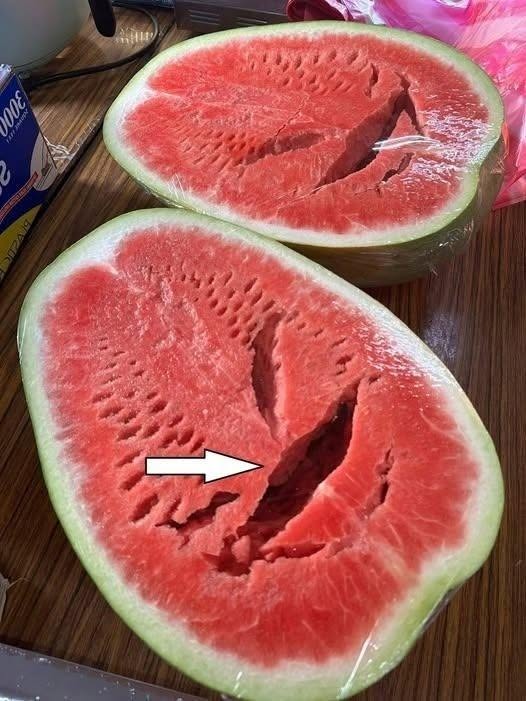
If the watermelon is otherwise fresh and the crack is simply part of hollow heart, the surrounding flesh is generally not automatically unsafe.
If the cavity contains mold, slime, an unusual smell, discoloration, or obvious decay, discard the fruit.
What If the Flesh Is Extremely Soft?
Very soft watermelon can simply be overripe, but if the texture is accompanied by a sour smell, bubbling, sliminess, or unusual discoloration, do not eat it.
What If the Watermelon Tastes Too Sweet?
Sweetness alone is not evidence of chemical treatment.
Watermelon varieties differ naturally in sugar content, and growing conditions and ripeness also influence sweetness.
What About a Soapy Taste?
A distinctly strange or unpleasant taste is a reasonable reason to stop eating the fruit, regardless of the cause.
You do not need to identify exactly what caused the abnormal flavor before deciding not to consume it.
Watermelon and Hydration
Because watermelon contains a high proportion of water, it can contribute to hydration.
However, it does not replace the need for regular drinking water, particularly during intense heat or physical activity.
Watermelon and Citrulline
Watermelon naturally contains citrulline, an amino acid involved in pathways related to nitric oxide production in the body.
Research has investigated citrulline in relation to cardiovascular and exercise physiology, but watermelon should not be presented as a treatment for circulation problems, erectile dysfunction, or cardiovascular disease.
Watermelon and Antioxidants
Red watermelon contains lycopene, the pigment also found in tomatoes and several other red fruits.
Lycopene has antioxidant activity and can be part of a nutrient-rich diet.
No single fruit, however, prevents aging or guarantees protection from chronic disease.
Can Watermelon Have a Diuretic Effect?
Watermelon contains a great deal of fluid, so eating it may increase overall water intake and therefore urination.
It should not be treated as a medical diuretic or used as a substitute for prescribed medication.
Frequently Asked Questions
Are Cracks Inside Watermelon Dangerous?
Not automatically. Internal cracking can result from normal growing conditions and is often a quality issue rather than a health hazard.
Do Cracks Prove Chlorfenuron Was Used?
No. Appearance alone cannot identify a specific agricultural chemical.
Should I Throw Away Every Hollow Watermelon?
No. If the fruit smells fresh, has normal texture and color, and shows no signs of spoilage, hollow heart by itself does not necessarily make it unsafe.
When Should I Definitely Throw It Away?
Discard watermelon that has visible mold, a sour or fermented smell, slime, extensive decay, or obviously abnormal taste.
Is Watermelon Healthy?
Yes, watermelon can be a nutritious part of a balanced diet, providing water, vitamin C, carotenoids, potassium, and several plant compounds.
Should I Wash Watermelon Before Cutting It?
Yes. Washing the rind helps reduce the chance of transferring contaminants to the flesh with the knife.
Can You Tell Whether a Watermelon Contains Pesticides by Looking at It?
No. Laboratory testing is required to determine specific chemical residues accurately.
Is a Yellow Field Spot Dangerous?
No. A yellow or creamy field spot is usually simply the area where the watermelon rested on the ground while growing.
Final Thoughts
Finding cracks or hollow spaces inside a watermelon can look alarming, especially after seeing viral warnings claiming that these marks prove dangerous chemical treatment.
But internal cracks alone are not reliable evidence of contamination.
Watermelons can develop cavities and unusual internal shapes naturally because of pollination, weather, rapid growth, variety, and other agricultural factors.
Instead of judging safety from one visual feature, look at the entire fruit.
If the flesh smells fresh, has normal color and texture, and shows no mold, slime, fermentation, or decay, an internal cavity may simply be a cosmetic defect.
If the watermelon smells sour, feels slimy, contains mold, or tastes distinctly abnormal, discard it.
Wash the rind before cutting, use clean equipment, refrigerate cut fruit promptly, and buy produce from reputable sources.
Watermelon can be a refreshing, nutritious food, and a strange-looking interior does not automatically turn it into something dangerous.
Knowing the difference between an unattractive growing defect and genuine signs of spoilage can help you avoid unnecessary fear while still making sensible food-safety decisions.
