
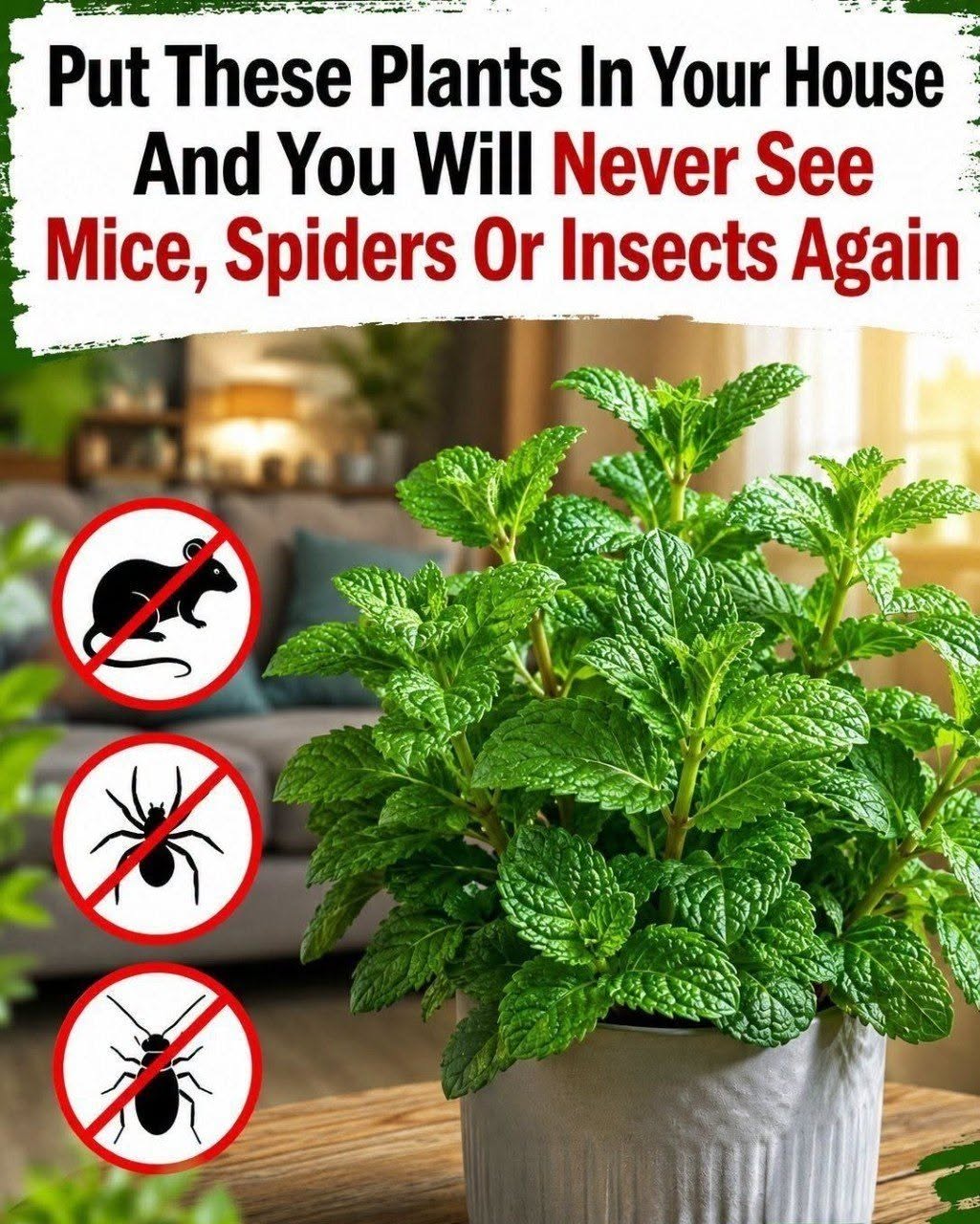
If mosquitoes seem to find you every time you sit outside, flies gather near the patio, or spiders keep appearing around doors and windows, your garden may be able to provide a little help.
Certain aromatic plants produce strong-smelling natural compounds that some insects and other pests tend to avoid. Growing these plants will not create an invisible force field around your home, and they should not replace proven pest-control measures when there is a serious infestation. Still, strategically placed herbs and flowers can be a useful part of a broader, low-chemical approach to making outdoor living spaces less attractive to unwanted visitors.
There is another advantage: many of these plants are beautiful, edible, or useful in the kitchen. Instead of filling your patio exclusively with ornamental greenery, you can grow plants that provide fragrance, flowers, herbs, and potentially some pest-deterring benefits at the same time.
How Can Plants Help Deter Insects?
The distinctive fragrance of many herbs comes from volatile aromatic compounds contained in their leaves, stems, and flowers. When the plant is touched, crushed, warmed by sunlight, or moved by the breeze, some of these compounds are released into the surrounding air.
Essential oils derived from plants such as citronella grass, basil, rosemary, lavender, and thyme have been studied for their effects on various insects. However, an important distinction is often overlooked online: growing a plant in the garden is not necessarily as powerful as applying a properly formulated repellent to the skin.
The concentration of aromatic compounds surrounding a living plant is generally much lower than the concentration found in an essential oil or tested repellent formulation.
So think of these plants as helpful companions rather than guaranteed pest eliminators.
What About Mice and Spiders?
This is another area where expectations should remain realistic.
Strongly scented plants are sometimes recommended traditionally for discouraging rodents, and aromatic herbs may make certain locations less appealing. However, plants alone are unlikely to solve an established mouse problem.
For mice, sealing entry holes, removing accessible food, storing animal feed securely, eliminating clutter, and using appropriate traps are considerably more important.
Similarly, spiders usually enter areas where they can find shelter and prey. Reducing the insects they feed on, sealing cracks, repairing screens, and removing webs and clutter will generally accomplish more than relying on a particular plant.
With those limitations understood, aromatic plants can still make a wonderful addition to a practical pest-management strategy.
1. Basil
Basil is one of the easiest multipurpose herbs to grow around a patio or vegetable garden.
Its distinctive fragrance comes from a mixture of volatile compounds, which can vary considerably depending on the basil variety. These aromatic substances are part of the reason basil and basil-derived oils have attracted interest in research involving mosquitoes and other insects.
For the home gardener, basil has an obvious bonus: you can walk outside, pick a few leaves, and immediately use them in pasta, salads, sauces, soups, sandwiches, or homemade pesto.
Try keeping pots of basil near sunny outdoor seating areas, doors, or frequently used garden spaces. Basil generally appreciates warmth, plenty of sunlight, and consistent watering without constantly waterlogged soil.
Regular harvesting encourages bushier growth and provides more aromatic leaves throughout the season.
Should You Rub Homemade Basil Mixtures on Your Skin?
Homemade recipes involving basil, alcohol, or essential oils are frequently shared online as mosquito repellents. However, a homemade mixture should not automatically be considered equivalent to a tested insect repellent.
Plant extracts and essential oils can irritate sensitive skin, and their effectiveness and duration can vary substantially.
If protection against mosquito-borne illness is important, use a properly labeled repellent according to its directions rather than depending solely on a homemade garden mixture.
2. Lavender
Few plants are as immediately recognizable by fragrance as lavender.
People often find its aroma pleasant and relaxing, while compounds found in lavender essential oil have been investigated for insect-repellent activity.
Lavender also brings beautiful purple flowers to the garden and can attract beneficial pollinators when blooming.
Plant lavender along sunny paths, near patios, around sitting areas, or in containers positioned close to entrances.
The most important rule with lavender is drainage. It generally performs best in sunny conditions and soil that does not remain constantly wet.
Overwatering is often a greater problem than underwatering once an established lavender plant is growing comfortably.
A Word of Caution About Lavender Oil
Concentrated essential oil is very different from simply smelling a lavender plant.
Essential oils can cause skin irritation or other reactions in some people and should not automatically be applied undiluted to the skin. Follow product instructions and keep concentrated oils away from children and pets unless the product is specifically intended for that use.
Basil and lavender may be the familiar favorites, but the next group contains some of the strongest-smelling herbs you can place around patios, pathways, and outdoor gathering spaces.
