
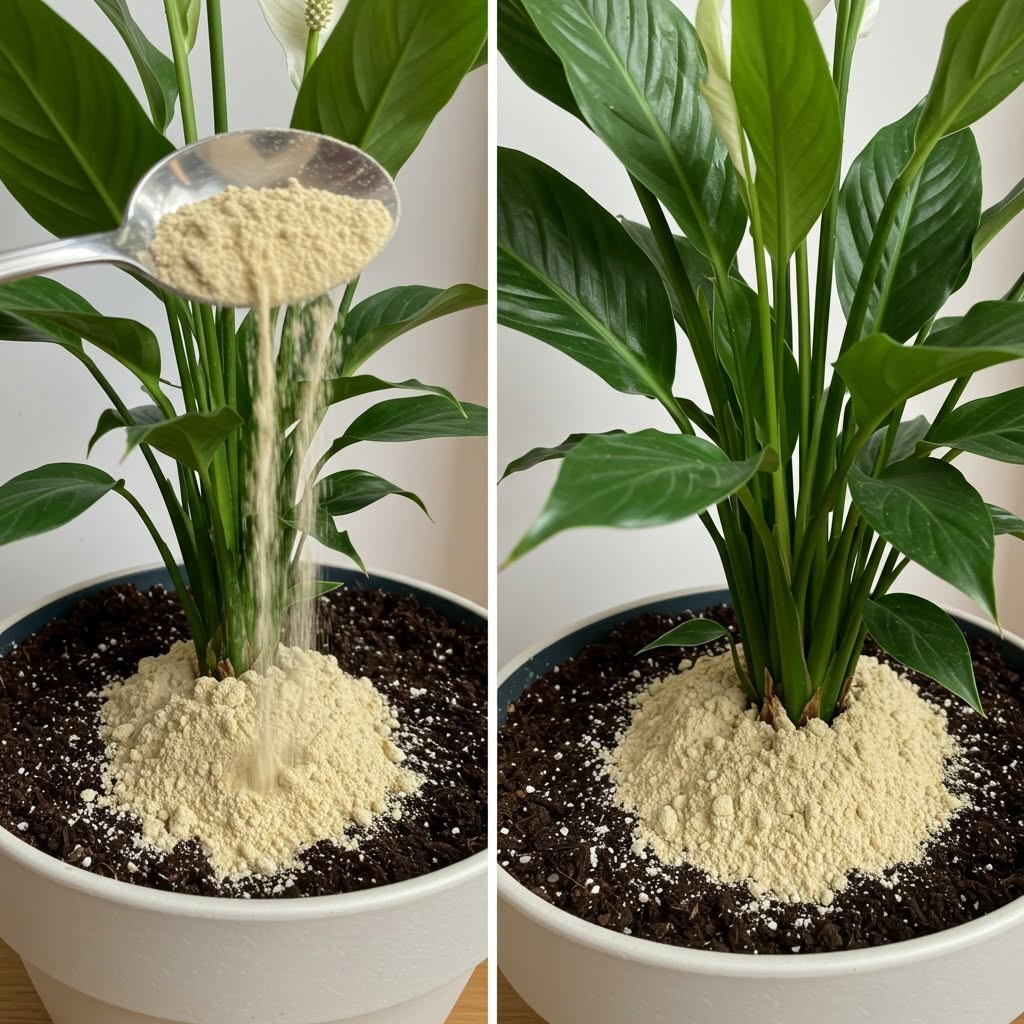
Peace lilies are among the most popular houseplants because of their glossy green leaves, elegant white blooms, and relatively easy care requirements.
They are often described as symbols of peace, calm, and renewal, which makes them especially popular in bedrooms, living rooms, offices, and other indoor spaces.
Recently, a simple homemade fertilizer made with tapioca flour has been shared as a way to help peace lilies bloom more consistently. While no single ingredient can guarantee continuous flowering for ten years, proper nutrition, light, watering, and general care can help a healthy peace lily live and bloom for many years.
Why Peace Lilies Are So Popular
Peace lilies are valued not only for their flowers but also for their attractive foliage.
Their broad, dark-green leaves can remain decorative even when the plant is not flowering, making them useful as year-round houseplants.
With appropriate conditions, mature peace lilies may flower periodically throughout the year.
Can a Peace Lily Bloom for 10 Years?
A healthy peace lily can certainly live for many years, and mature plants may continue producing flowers season after season.
However, continuous blooming for a decade cannot be guaranteed by one fertilizer or homemade ingredient alone.
Flowering depends on several factors, including:
- Light exposure
- Watering habits
- Soil quality
- Root health
- Temperature
- Humidity
- Nutrient availability
- Plant age and variety
The best approach is to provide balanced care rather than relying on a single “miracle” ingredient.
The Homemade Tapioca Fertilizer Idea
One popular home method involves mixing tapioca flour with water and using the liquid around the root zone.
Tapioca flour is made from cassava starch. It may contain small amounts of minerals depending on how it has been processed, but it should not be considered a complete plant fertilizer.
That means it may be used experimentally in small amounts, but it should not replace a balanced fertilizer formulated for houseplants.
How to Prepare the Mixture
A commonly shared version uses:
- 1 tablespoon tapioca flour
- 400 ml water
Mix the tapioca flour thoroughly into the water until the liquid is as smooth as possible.
Then strain the mixture to remove clumps before applying it to the soil.
How to Apply It
Pour a small amount of the strained liquid evenly onto already-moist soil around the base of the peace lily.
Avoid saturating the pot or leaving the roots sitting in water.
If you decide to experiment with this homemade mixture, use it sparingly rather than at every watering.
The real secret to long-term flowering is not one ingredient alone. Light, watering, drainage, and correct feeding make a much bigger difference than any single kitchen remedy.
