
What Is Chlorfenuron?
Chlorfenuron is a synthetic plant growth regulator that has been used in agriculture to influence the development and size of certain fruits.
Its legal status, permitted crops, residue limits, and agricultural use vary by country and region.
As with other regulated agricultural chemicals, safety depends on factors such as dose, application method, timing, and compliance with local residue standards.
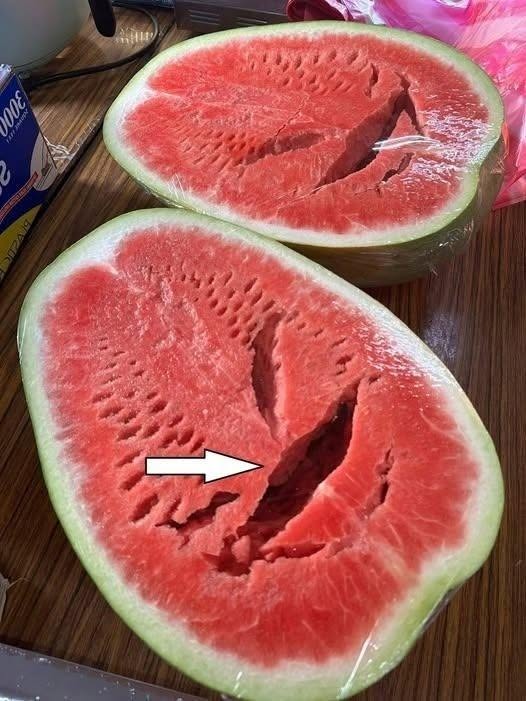
Claims that simply eating a watermelon with internal cracks will cause hormonal disorders, nervous-system damage, reproductive problems, or cancer are not established by the appearance of the fruit alone.
If you are concerned about pesticide or agricultural chemical residues, purchasing produce from reputable suppliers and following local food-safety guidance is more reliable than trying to diagnose chemical exposure by sight.
When Should You Avoid Eating a Watermelon?
Instead of focusing only on internal cracks, pay attention to signs that actually suggest deterioration.
1. Sour or Fermented Smell
Fresh watermelon should smell mild and sweet.
A sour, fermented, alcoholic, or otherwise unpleasant odor is a reason to discard it.
2. Slimy Flesh
The inside should be juicy and crisp or tender depending on ripeness, but it should not feel slimy.
A slippery or sticky surface may indicate spoilage.
3. Mold
Visible mold is a clear reason not to eat the affected watermelon.
Because watermelon is a soft, high-moisture fruit, mold can spread below the visible surface.
4. Unusual Discoloration
Dark brown, black, gray, or extensively translucent areas combined with poor texture or odor may signal decay.
5. Mushy or Collapsing Texture
A watermelon that has become excessively soft, watery, or collapsing may be overripe or spoiled.
6. Fizzy or Fermented Taste
If a small taste seems fizzy, sour, alcoholic, or otherwise clearly abnormal, stop eating it.
Does an Internal Crack Alone Mean You Must Throw It Away?
Not necessarily.
If the watermelon has a clean, fresh smell, normal color, firm flesh, and no mold or slime, an internal cavity may simply be a quality defect rather than a food-safety problem.
The cracked areas may be less attractive or have a different texture, but the appearance alone does not prove contamination.
What Is Hollow Heart?
Hollow heart is a physiological condition in which gaps develop inside the watermelon as the fruit grows.
It has been associated with factors such as imperfect pollination and rapid changes during fruit development.
Although it can make the watermelon look unusual, it is generally considered a quality issue rather than evidence of poisoning.
Can Watermelon Naturally Develop Different Textures?
Yes.
Even within the same fruit, some areas may be firmer while others are softer.
Ripeness, variety, temperature, storage, and growing conditions can all influence texture.
Texture should therefore be considered together with smell, color, storage history, and overall condition.
So how can you choose a watermelon that is more likely to be fresh, ripe, and pleasant inside? A few simple checks at the store can help.
