
Remove Old Flowers
When a flower fades and turns green or brown, cut the flower stalk near the base with clean scissors.
This improves appearance and allows the plant to direct energy toward new growth.
Keep the Leaves Clean
Dust can collect on large peace lily leaves.
Gently wipe them with a damp, soft cloth from time to time.
Clean leaves can capture light more effectively and simply look healthier.
Do Not Use Leaf-Shine Products Excessively
Commercial leaf-shine products are not necessary for healthy growth and can sometimes leave residues on leaves.
Plain water and a soft cloth are usually enough.
When Should You Repot?
A peace lily may need repotting when:
- Roots are circling densely around the pot
- Roots emerge from drainage holes
- The soil dries unusually quickly
- The plant becomes difficult to water properly
- Growth slows despite otherwise good care
Choose a pot only slightly larger than the current one.
Moving a small plant directly into a very large pot can leave too much wet soil around the roots.
What If Your Peace Lily Has Leaves But No Flowers?
Insufficient light is one of the first things to consider.
A peace lily can survive in dim conditions while producing mostly foliage.
Move it gradually to brighter indirect light and observe its response over the following weeks.
Also review feeding habits, pot size, temperature, and whether the plant is mature enough to bloom.
Why Are the Flowers Turning Green?
Peace lily flowers often become green as they age.
This can be part of the natural flowering cycle and does not automatically indicate a problem.
Very green flowers can also be associated with lighting or feeding conditions, but aging is a common reason.
Why Are the Leaf Tips Brown?
Brown tips can develop because of:
- Dry air
- Inconsistent watering
- Mineral buildup in the soil
- Excess fertilizer
- Water quality in some locations
Trim damaged tips if desired, but focus on correcting the underlying care issue.
Can Tap Water Affect Peace Lilies?
Peace lilies can sometimes be sensitive to minerals or additives in water.
If brown tips repeatedly appear despite otherwise good care, experimenting with filtered or low-mineral water may help.
Are Peace Lilies Safe Around Pets?
Peace lilies are not true lilies, but they contain calcium oxalate crystals that can irritate the mouth if chewed.
Keep them away from pets and young children who may bite the leaves.
If a pet chews the plant and develops significant drooling, mouth irritation, vomiting, or other symptoms, contact a veterinarian.
Can You Propagate a Peace Lily?
Yes.
Mature plants can often be divided during repotting.
Gently separate sections that have both roots and leaves, then place each division into its own appropriately sized pot.
A Simple Long-Term Care Routine
- Give the plant bright indirect light.
- Water when the upper soil begins drying.
- Never leave the roots constantly waterlogged.
- Use a pot with drainage holes.
- Feed lightly during active growth.
- Remove old flowers and damaged leaves.
- Keep foliage reasonably clean.
- Repot only when necessary.
- Protect the plant from temperature extremes.
Frequently Asked Questions
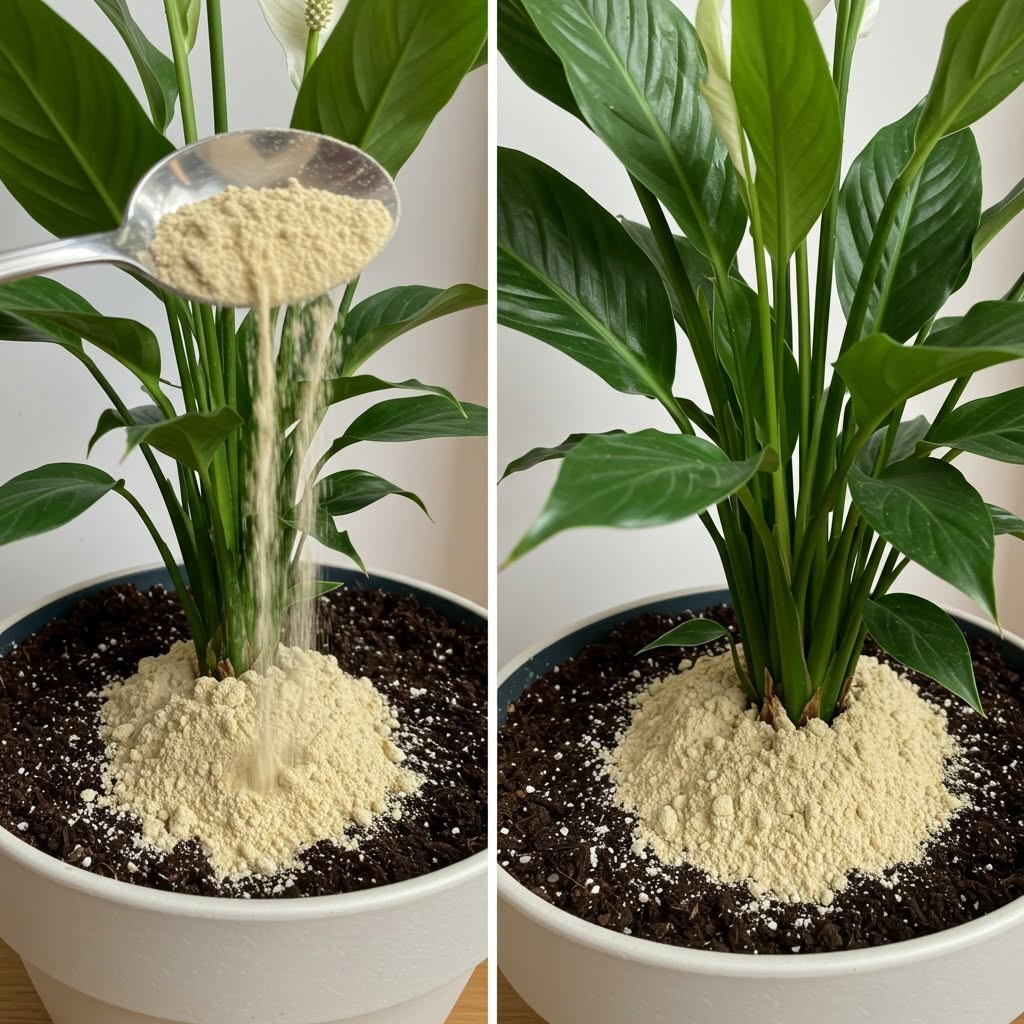
Will Tapioca Flour Make a Peace Lily Bloom for 10 Years?
There is no good evidence that tapioca flour alone can guarantee continuous flowering for ten years.
Can I Try the Tapioca-Water Mixture?
You can experiment cautiously with a small amount, but it should not replace balanced plant nutrition and correct care.
How Often Should I Water My Peace Lily?
Do not rely on a fixed weekly number. Check the soil and water when the upper layer begins to dry.
Does a Peace Lily Need Direct Sun?
No. Bright indirect light is generally preferable because harsh direct sun can scorch leaves.
Why Has My Peace Lily Stopped Flowering?
Low light, poor nutrition, excessive feeding, root stress, temperature problems, or simply the plant’s natural flowering cycle can all contribute.
Can a Peace Lily Live for Many Years?
Yes. With suitable care, peace lilies can remain healthy houseplants for many years and may flower repeatedly.
Final Thoughts
The idea that one ingredient can make a peace lily flower continuously for ten years is appealing, but healthy plants rarely depend on a single trick.
A homemade tapioca mixture may be an interesting experiment, but the real foundation of long-term growth is much simpler: bright indirect light, sensible watering, good drainage, stable temperatures, and balanced nutrition.
When those basics are right, a peace lily can reward you with lush green leaves and elegant white blooms again and again.
Think of homemade fertilizers as optional additions, not magical substitutes for proper plant care.
With patience and consistent attention, the peace lily can remain a beautiful, calming presence in your home for many years.
