
Light Is One of the Biggest Factors in Flowering
Peace lilies tolerate relatively low-light conditions, but tolerating low light is not the same as thriving in it.
If you want more flowers, bright indirect light is usually better.
Place the plant near a window where it receives plenty of natural light without being exposed to harsh direct midday sun.
Too much direct sunlight can scorch the leaves, while too little light may result in healthy foliage but very few flowers.
Watering: Avoid a Fixed Schedule
Advice such as watering two or three times every week can be misleading because water needs change with temperature, pot size, humidity, soil type, and season.
A better method is to check the soil first.
Water when the upper layer begins to feel slightly dry, then water thoroughly until excess drains from the bottom.
Do not allow the pot to remain standing in water for long periods.
Signs of Overwatering
Too much water can lead to root stress or root rot.
Possible warning signs include:
- Persistent yellowing leaves
- Soft stems
- Very wet soil that stays saturated
- Unpleasant smell from the potting mix
- Wilting despite wet soil
Signs of Underwatering
Peace lilies are famous for dramatically drooping when thirsty.
Leaves may suddenly become limp and hang downward.
If the soil is dry, watering usually helps the plant recover relatively quickly.
Repeated severe wilting, however, can stress the plant and reduce flowering.
Use a Pot With Drainage
Good drainage is essential.
A pot without drainage holes can trap water around the roots and create ideal conditions for root rot.
Use a potting mix that holds some moisture but still allows excess water to drain freely.
Temperature Matters
Peace lilies prefer stable indoor temperatures.
Avoid placing them directly beside:
- Cold drafts
- Air-conditioning vents
- Radiators
- Heaters
- Very cold windows in winter
Sudden temperature changes can stress the plant and may interfere with flowering.
Humidity Can Help
Peace lilies originate from humid environments and generally appreciate moderate household humidity.
If the air is very dry, especially during winter heating, brown leaf tips may develop.
A humidifier, grouping plants together, or keeping them away from direct heat sources can help.
What Fertilizer Does a Peace Lily Actually Need?
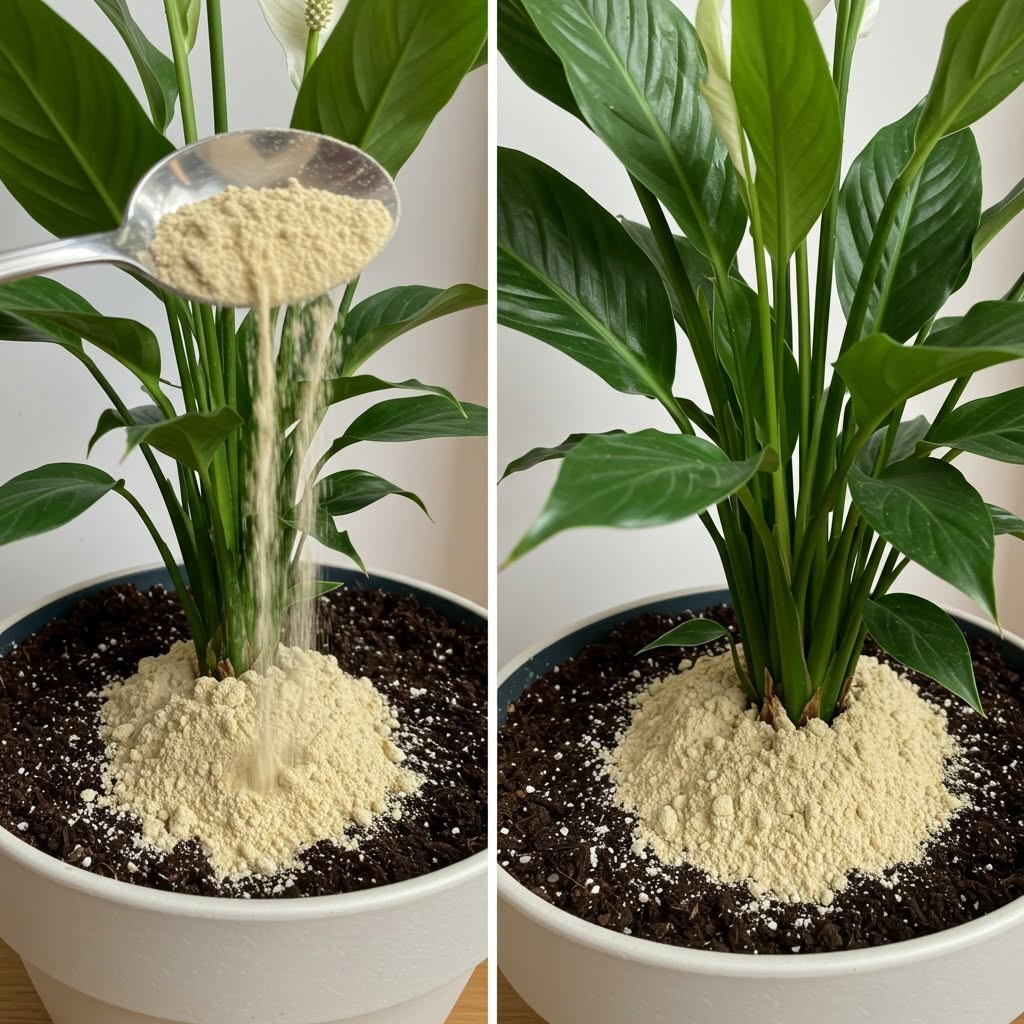
For dependable nutrition, a balanced houseplant fertilizer used at a diluted strength is usually more predictable than homemade starch mixtures.
Too much fertilizer can damage roots, so more is not better.
During active growth, occasional feeding according to the product label is usually sufficient.
Growth and nutrient needs often slow during darker winter months.
Why Too Much Fertilizer Can Stop Flowers
Excessive fertilizer can cause salt buildup in the soil and damage roots.
Some fertilizers that are very high in nitrogen may encourage abundant leaf growth without increasing flowers.
Balanced feeding is more useful than constantly adding nutrients.
Once the plant has the right light, water, and nutrients, a few maintenance habits can help keep it healthy enough to flower year after year.
