
Best Time to Treat Weeds
Small weeds are easier to control than large established plants.
Treating them shortly after they emerge often produces better results because their root systems have not fully developed.
Dry Weather Can Help
Although boiling water works through heat rather than drying alone, treating weeds during a dry period can make it easier to observe whether they are recovering.
Rain immediately afterward does not necessarily undo the heat damage, but it may encourage surviving roots to regrow.
Use Leftover Hot Water When Practical
If you have just boiled plain water for cooking vegetables, pasta, or another purpose, some gardeners reuse the hot water on weeds after removing the food.
This can reduce waste.
However, never carry an unstable, oversized pot of boiling cooking water outside if doing so creates a burn risk.
Safety is more important than saving a small amount of water.
What About Water With Salt in It?
Avoid repeatedly pouring heavily salted cooking water into soil or near plants.
Excess salt can accumulate and interfere with plant growth.
Can Boiling Water Damage Pavers?
Most ordinary concrete and stone paving can tolerate hot water, but some materials and sealants may be sensitive to thermal shock or repeated high heat.
If your patio has a special coating, resin, decorative finish, or unusual stone, test a small hidden area first or check manufacturer guidance.
Can It Damage Asphalt?
Occasional hot water on weeds in asphalt cracks may not cause obvious damage, but repeated exposure to very high temperatures could potentially affect some binders or surface treatments.
Use carefully and avoid flooding the area.
Can Boiling Water Kill Weed Seeds?
Very high temperatures can damage seeds that receive enough direct heat.
However, boiling water poured onto the surface will not reliably sterilize deeper soil.
New weeds can therefore still emerge later from seeds already present underground or carried in by wind.
How to Reduce Weed Regrowth
Killing existing weeds is only part of long-term control.
After removing dead plants, consider addressing the conditions that allowed them to grow.
Clean Out Paving Cracks
Soil, leaves, and organic debris collect between paving stones over time.
This material creates an ideal place for weed seeds to germinate.
Sweeping and clearing cracks can reduce the amount of growing medium available.
Repair Wide Cracks
If weeds repeatedly return in the same driveway or patio cracks, repairing those gaps may be more effective than treating the plants forever.
Use Mulch in Garden Beds
A layer of mulch can block light from reaching many young weed seedlings.
Organic mulch also helps conserve soil moisture and can improve the appearance of beds.
Pull Weeds Before They Seed
If a weed has flowers or seed heads, removing it before seeds mature can prevent hundreds or even thousands of new plants later.
Combine Methods
No single weed-control technique is perfect for every situation.
A practical approach might include:
- Boiling water for pavement cracks
- Hand pulling in flower beds
- Mulching around shrubs
- Hoeing young weeds in vegetable gardens
- Repairing gaps in hard surfaces
Important Burn Safety
Boiling water is simple, but it is not harmless.
It can cause severe burns in seconds.
Always:
- Keep children and pets away
- Wear closed shoes
- Use a stable kettle or pot
- Keep both hands steady
- Avoid walking across slippery surfaces
- Never throw or splash boiling water
- Do not fill a container so high that it spills while walking
What If You Accidentally Splash Yourself?
Move away from the heat source and cool the affected skin under cool or lukewarm running water.
Do not apply ice directly to a burn.
Significant burns, blistering, burns involving the face or large areas, or severe pain should receive appropriate medical evaluation.
Is This Method Safe Around Pets?
Once the area has completely cooled, there is no herbicide residue from plain water.
However, pets must be kept away during treatment because hot water can burn paws or skin.
Does It Work on Dandelions?
It can kill the leaves and crown if enough heat reaches them, but mature dandelions have deep taproots.
If the root survives, the plant may return.
Repeat applications or physical removal of the taproot may be necessary.
Does It Work on Crabgrass?
Young plants growing in cracks can be damaged effectively.
Crabgrass growing inside a lawn should not be treated with boiling water because surrounding turf will also be harmed.
Does It Work on Moss?
Hot water can damage moss, but recurring moss often indicates shade, moisture, compaction, or drainage conditions that also need attention.
Does It Work on Poison Ivy?
Boiling water is not a particularly good choice for poison ivy because handling the dead plant still exposes you to irritating plant oils.
Use an appropriate control method and protective precautions instead.
Can You Use This Method Every Week?
On hard-surface cracks, occasional repeated treatment is reasonable if weeds continue returning.
There is little benefit to pouring boiling water onto empty ground repeatedly.
Frequently Asked Questions
Does Boiling Water Kill Weeds Instantly?
It can damage foliage almost immediately, but complete plant death may take hours or days.
Will One Treatment Kill the Roots?
Sometimes, especially with young shallow-rooted weeds. Deep-rooted perennial weeds may survive and regrow.
How Much Water Should I Use?
Use enough to thoroughly soak the leaves and base of the individual weed without flooding a large surrounding area.
Do I Need to Pull the Weed Afterward?
Not immediately. Allow it to wilt and die first, then remove the dried growth if desired.
Will Boiling Water Harm Soil?
It temporarily heats the area it contacts and can harm small organisms or nearby roots. For that reason, it is best reserved for cracks and hardscape areas rather than healthy garden soil.
Is Boiling Water Better Than Commercial Herbicide?
It depends on the situation. Hot water is useful for small weeds in targeted areas, while large infestations or persistent perennial weeds may require different management strategies.
What Is the Biggest Advantage?
It requires no conventional herbicide and uses only water.
What Is the Biggest Disadvantage?
It is non-selective and can burn desirable plants just as easily as weeds. Carrying boiling water also creates a real injury risk.
The Bottom Line
Sometimes the simplest household methods really can be useful.
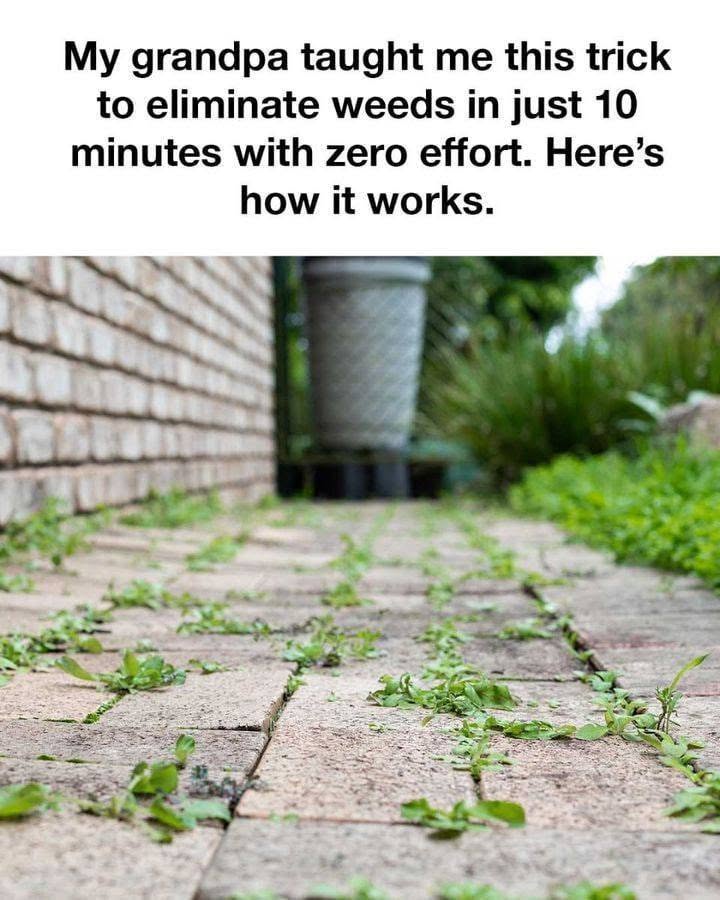
Boiling water can quickly damage small weeds growing in sidewalk cracks, driveway joints, patio gaps, and other places where no vegetation is wanted.
The technique is inexpensive, requires no conventional herbicide, and often produces visible wilting very quickly.
But it is not magic.
Deep-rooted weeds may need repeated treatment, new seeds can still germinate later, and boiling water can damage any desirable plant it touches.
The key is to use it selectively, safely, and in the right location.
Keep children and pets away, carry hot water carefully, aim directly at the weed, and avoid lawns or planted beds.
For persistent weeds, combine the method with prevention such as clearing paving cracks, repairing gaps, mulching garden beds, and removing weeds before they produce seeds.
Grandpa’s trick works because it follows a very simple principle: sometimes you do not need an expensive product to solve a small household problem.
Sometimes a kettle of hot water, a steady hand, and a few minutes are enough.
