
How Often Should You Clean a Fan?
The ideal schedule depends on your home.
A fan used every day in a home with pets, open windows, or heavy dust may need attention every week or two.
A lightly used fan may need only occasional cleaning.
The easiest rule is to clean it when you notice visible dust beginning to collect rather than waiting for a thick layer to form.
Do a Quick Weekly Dusting
A fast dry wipe takes only a few minutes.
Regularly dusting the grille prevents debris from becoming compacted and sticky.
Vacuum Around the Fan
Fans continually pull air from the surrounding room.
If the floor, furniture, and nearby surfaces are dusty, that material eventually ends up on the fan.
Vacuuming the surrounding area helps slow the buildup.
Keep the Fan Away From Grease When Possible
A fan placed very close to a stovetop or cooking area can collect airborne oil droplets.
Once grease coats the grille and blades, ordinary dust sticks to it easily.
If possible, position the fan farther from active cooking areas.
Pet Hair Can Build Up Quickly
Homes with cats or dogs may notice hair and dander collecting around the rear grille.
A vacuum brush attachment is particularly useful for removing this material before it gets pulled farther inside.
Do Not Forget the Base and Controls
Dust also settles on the:
- Base
- Stand
- Buttons
- Remote-control sensor
- Handle
- Power cord
Wipe these with a dry or barely damp cloth according to the manufacturer’s instructions.
Cleaning a Tower Fan
Tower fans often have narrow vertical vents that are difficult to reach.
Start with a vacuum brush attachment and work carefully along the intake and outlet vents.
A soft brush can loosen dust trapped between narrow openings.
Because the motor and internal components are close behind the vents, avoid spraying liquid into a tower fan.
Cleaning a Box Fan
Box fans typically have large front and rear grilles, making dry vacuuming particularly effective.
If the blades cannot be reached safely without removing the grille, do not force tools through the openings.
For heavy internal buildup, proper disassembly according to the manufacturer’s instructions may ultimately be necessary.
Cleaning a Pedestal Fan
Pedestal fans often allow good access to both sides of the grille.
Vacuum first, then wipe the exterior.
Pay attention to the rear motor housing, but clean it dry whenever possible because the ventilation openings lead directly toward electrical components.
Cleaning a Desk Fan
Small desk fans are easy to pick up, so people sometimes forget to unplug them first.
Always disconnect power before cleaning, even if the fan is small.
Use a cotton swab or small brush around tight exterior areas, but do not push loose fibers through motor vents.
When You Really Should Take the Fan Apart
Cleaning without disassembly works best for routine maintenance.
A deeper cleaning may be needed when:
- Blades have thick, sticky buildup
- Dust is packed inside the rear housing
- The fan smells burnt or musty
- Airflow remains weak after exterior cleaning
- Visible debris cannot be reached safely
If the grille is designed to be removed, follow the manufacturer’s instructions carefully.
If you are not comfortable disassembling the fan, professional servicing may be a better option.
Do Not Open the Motor Housing
Removing a washable grille is very different from opening the motor or electrical housing.
Unless you are qualified and the manufacturer specifically instructs you to do so, leave the motor enclosure closed.
What If the Fan Still Runs Slowly After Cleaning?
Dust is not always the cause of poor performance.
Slow or noisy operation may also indicate:
- Worn bearings
- A damaged motor
- Loose blades
- An electrical problem
- A faulty speed controller
If the fan overheats, produces a burning smell, sparks, or makes unusual electrical noises, unplug it and stop using it.
Can Compressed Air Be Used?
Compressed air may move loose dust, but it can also push debris deeper into the motor housing or spread it around the room.
A vacuum and soft brush are often easier to control.
If the manufacturer permits compressed air, use short, controlled bursts with the fan unplugged.
Can You Use Disinfectant Spray?
Directly spraying disinfectant into a fan is not recommended.
If you need to clean frequently touched exterior surfaces, apply an appropriate product to a cloth and wipe carefully, keeping moisture away from electrical openings.
Can You Wash the Grille With a Hose?
Only if the grille has been completely removed from the electrical appliance and the manufacturer says it can be washed.
Never hose down an assembled fan.
Can You Use a Hair Dryer to Blow Dust Out?
A hair dryer may simply scatter dust around the room and can introduce heat into areas where it is not useful.
A vacuum with a brush attachment is generally a cleaner option.
A Simple No-Disassembly Cleaning Routine
- Unplug the fan.
- Vacuum both sides of the grille.
- Brush dust from tight openings.
- Wipe the grille with a lightly dampened cloth.
- Reach accessible blades with a cloth-covered thin tool.
- Wipe away soap residue.
- Dry all surfaces thoroughly.
- Allow the fan to air-dry completely.
- Reconnect power only when you are certain it is dry.
Frequently Asked Questions
Can I Clean a Fan Without Removing the Grille?
Yes, light and moderate dust can often be removed with vacuuming, brushing, and careful wiping through the grille.
Can I Spray Water Directly Into the Fan?
No. Avoid spraying water or cleaner into the appliance because moisture can reach the motor and electrical components.
What Is the Easiest Way to Remove Dust From Fan Blades?
If the blades are reachable through wide grille openings, use a microfiber cloth wrapped around a smooth, thin tool while the fan is unplugged.
Is Vinegar Necessary?
No. Warm water and a small amount of mild dish soap are enough for many cleaning jobs.
Can I Run the Fan While It Is Covered With a Plastic Bag?
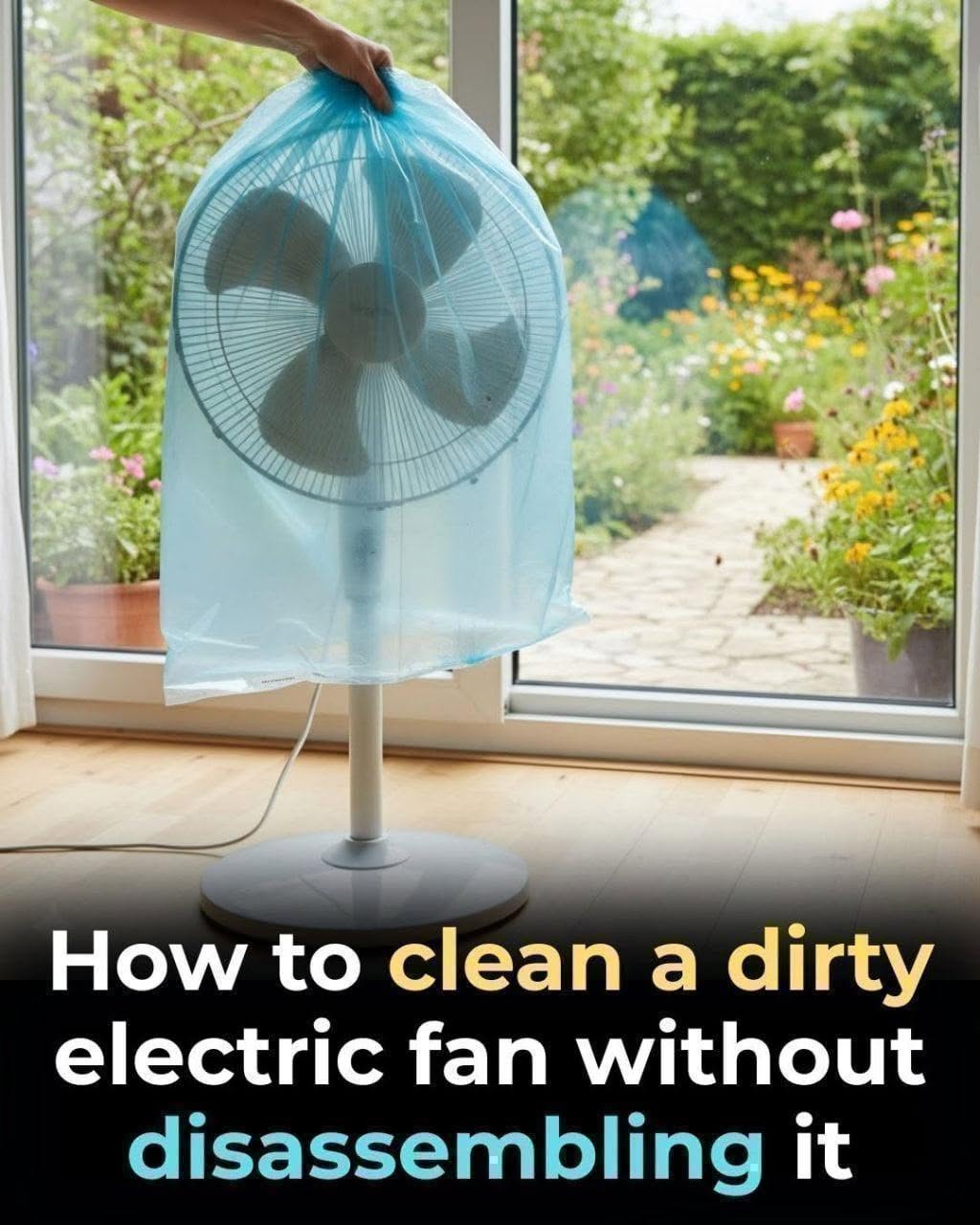
It is safer not to use this viral method unless your manufacturer specifically recommends it. Covering a running fan can interfere with airflow or moving components.
How Long Should I Let the Fan Dry?
There is no universal time because it depends on how much moisture was used and the design of the fan.
Do not reconnect it until every cleaned area is completely dry.
Why Does Dust Come Back So Quickly?
A fan moves large volumes of room air, so it naturally collects airborne dust. Pets, open windows, carpeting, cooking residue, and nearby fabric can increase accumulation.
Will Cleaning Make the Fan Blow More Air?
If heavy dust was restricting the grille or coating the blades, cleaning may improve airflow. Mechanical problems will not be fixed by cleaning alone.
Final Thoughts
Cleaning a fan does not always require taking the entire appliance apart.
For routine maintenance, the safest approach is often simple: unplug it, vacuum the grille, loosen dust with a soft brush, wipe reachable areas with a barely damp cloth, and let everything dry completely.
The most important rule is to keep liquid away from the motor and electrical components.
Rather than waiting until the fan is coated in thick dust, give it a quick dry cleaning regularly. A few minutes of maintenance can prevent the heavy buildup that makes deep cleaning difficult.
And while some viral cleaning tricks make the process look dramatic, the simplest method is often the safest one.
A vacuum, microfiber cloth, gentle brush, and a little patience are usually all you need to keep your fan looking cleaner and moving air more efficiently without dismantling it.
