
Step 6: Reach the Blades Through the Grille
If the grille openings are wide enough, wrap a clean microfiber cloth around a thin ruler, silicone spatula, or another smooth flat tool.
Secure the cloth so it cannot slip off inside the fan.
Lightly dampen the cloth rather than soaking it.
Carefully slide it through the grille and wipe the accessible surface of each blade.
Do not force the tool through an opening that is too narrow.
Step 7: Rotate the Blades by Hand
With the fan still unplugged, gently rotate the blades by hand if the design allows safe access.
This lets you bring different blade sections within reach.
Never rotate the blades aggressively or bend them.
If they resist movement, stop and do not force them.
Step 8: Use a Soft Brush for Tight Areas
A clean, dry paintbrush or soft detailing brush can help loosen dust along:
- Blade edges
- Grille corners
- Rear vents
- Small seams
Brush the debris toward an area where it can be vacuumed or wiped away.
Step 9: Deal With Stubborn Greasy Dust
Fans used near kitchens can collect a greasy film that dry dusting alone may not remove.
For this type of buildup, lightly dampen the cloth with warm soapy water and wipe repeatedly rather than spraying directly onto the fan.
Allow the cleaner to sit on the cloth-covered surface for a short time if necessary, then wipe again.
Several gentle passes are safer than saturating the appliance.
Should You Spray the Blades Directly?
It is safer not to.
Direct spraying can allow liquid to travel through the grille into the motor or electrical components.
Apply cleaning solution to your cloth or brush instead.
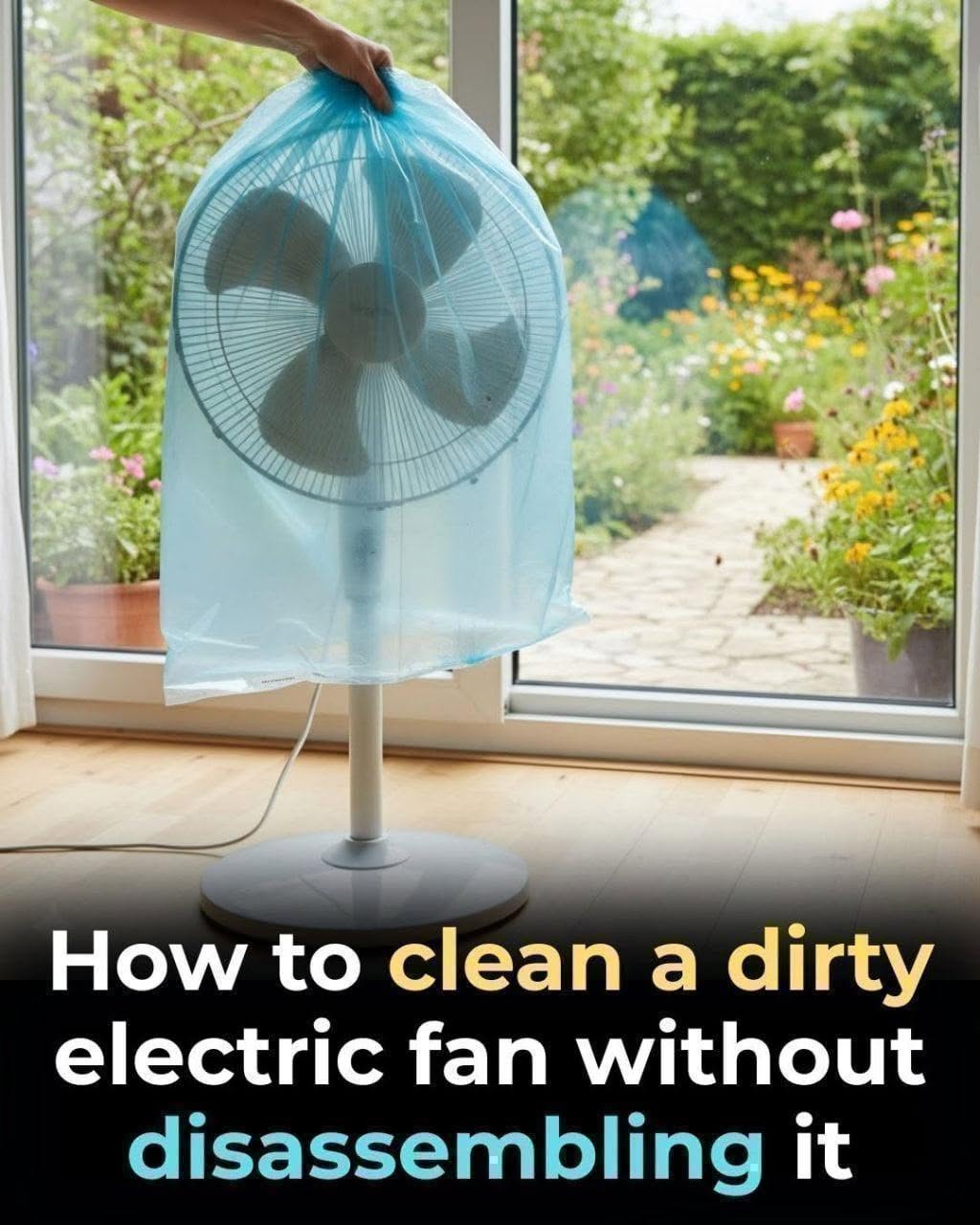
What About the Plastic Bag Trick?
Some online cleaning methods suggest placing a large plastic bag around a fan and running it to blow loosened dust into the bag.
This is not the best method for many household fans.
A plastic bag can interfere with airflow, contact moving parts, block motor ventilation, or create other hazards.
Unless the manufacturer specifically provides such a cleaning method, it is safer to keep the fan unplugged while cleaning and remove loosened dust with a vacuum, cloth, or brush.
Why Mild Dish Soap Works
Dish soap helps break up light grease and grime.
A very small amount diluted in water is usually sufficient for washable exterior surfaces.
More soap is not better because excessive residue can leave the grille sticky and attract more dust.
What White Vinegar Can Do
Diluted white vinegar may help loosen certain residues and reduce some odors on compatible hard surfaces.
However, it is not necessary for routine fan cleaning, and it should never be poured or sprayed into electrical components.
Always check the manufacturer’s instructions before using acidic cleaners on finishes or coated surfaces.
Step 10: Wipe With a Clean Damp Cloth
After using soap, wipe the cleaned exterior areas with a second cloth that has been lightly dampened with plain water.
This removes soap residue.
Again, the cloth should be damp rather than dripping wet.
Step 11: Dry Thoroughly
Use a dry microfiber cloth to wipe the grille and any reachable blade surfaces.
Then allow the fan to air-dry completely before plugging it back in.
If there is any possibility that moisture entered the appliance, give it extra drying time.
Once the visible dust is gone, a few simple habits can keep the fan cleaner much longer and make the next cleaning far easier.
