
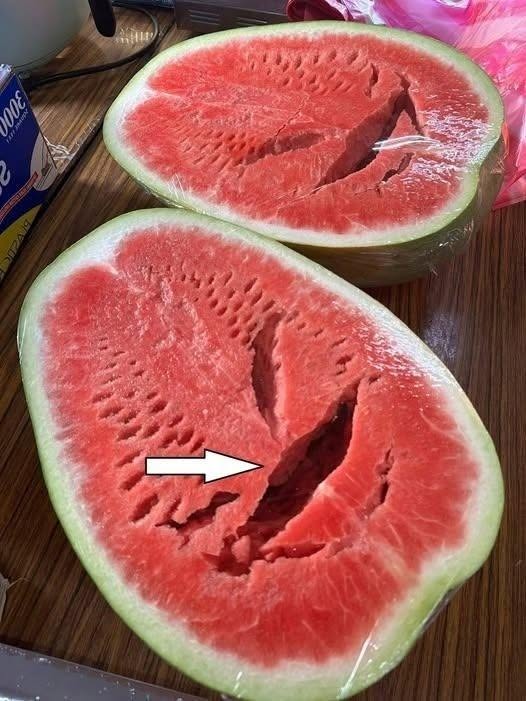
Cutting open a watermelon and finding unusual cracks, hollow spaces, grooves, or separated flesh can be surprising. Some viral posts claim that these features automatically mean the fruit was treated with dangerous growth chemicals and should immediately be thrown away.
The reality is more nuanced. Internal cracking or hollow areas can occur for several reasons, including growing conditions, weather, pollination, rapid fruit development, variety, or agricultural practices. Appearance alone cannot reliably prove that a watermelon contains a particular chemical.
Still, knowing what normal watermelon should look, smell, and taste like can help you decide when a fruit is simply imperfect and when it may actually be spoiled.
Why Watermelon Is Such a Popular Summer Fruit
Watermelon is naturally high in water, making it refreshing during hot weather.
Depending on the variety and serving size, watermelon provides nutrients and plant compounds including:
- Vitamin C
- Vitamin A precursors such as beta-carotene
- Potassium
- Magnesium
- Lycopene and other antioxidants
- Citrulline, an amino acid naturally present in watermelon
Because watermelon is largely composed of water, it can also contribute to everyday fluid intake as part of a balanced diet.
What Do Cracks Inside a Watermelon Mean?
Internal cracks and hollow spaces are sometimes referred to as hollow heart or internal cracking.
They may appear as:
- Large open spaces in the center
- Long cracks running through the flesh
- Separated sections of red flesh
- Irregular cavities
- Areas that look less densely packed than the rest of the fruit
These features do not automatically mean the watermelon is unsafe.
Hollow heart can develop because of environmental and growing factors, particularly conditions affecting pollination and early fruit development.
In many cases, the fruit remains edible if it smells fresh, has normal texture, and shows no signs of spoilage.
Why Viral Posts Often Mention Chlorfenuron
Some online claims connect cracked watermelon flesh with chlorfenuron, also known as CPPU, a plant growth regulator used in certain agricultural settings.
Plant growth regulators can influence fruit development, and inappropriate agricultural use may affect fruit quality. However, cracks or cavities inside a watermelon are not reliable evidence that chlorfenuron was used.
You cannot determine whether a particular watermelon contains agricultural chemical residues simply by looking at the pattern of its flesh.
Testing and regulatory monitoring are required to identify specific residues accurately.
The important distinction is that an unusual-looking watermelon is not automatically dangerous—but certain changes in smell, texture, or color really can signal spoilage.
