
7. Marigolds
Marigolds have been planted alongside vegetables for generations.
Their distinctive aroma and root chemistry have made them particularly interesting in gardening and agricultural research.
Certain marigold species can be useful in crop-management strategies involving specific soil nematodes, although simply planting one marigold beside a vegetable does not automatically eliminate every garden pest.
Above ground, their strong scent and abundant flowers make them popular companion plants around vegetable beds.
They are especially attractive because they are relatively easy to grow and provide bright yellow, orange, and red flowers for long periods.
Where Marigolds Work Well
Plant them around vegetable beds, along sunny borders, in containers, or between selected crops.
They generally appreciate full sun and regular watering while establishing themselves.
Removing faded flowers can encourage continued blooming.
Marigolds will not magically make an entire garden pest-free, but they can contribute diversity, color, and potential companion-planting benefits.
8. Catnip
Catnip is famous for its effect on many cats, but its chemistry is also fascinating from an insect perspective.
The plant contains an aromatic compound called nepetalactone, which has been studied for repellent activity against certain insects, including mosquitoes.
Growing catnip near outdoor spaces can therefore be an interesting addition to an aromatic garden.
However, there is an obvious consideration if neighborhood cats regularly visit your property: catnip may attract exactly the furry guests its name suggests.
Growing Catnip
Catnip is generally easy to establish in sunny or partly sunny locations and can spread readily under favorable conditions.
Like mint, it may be easier to control in a container if you do not want it wandering through the garden.
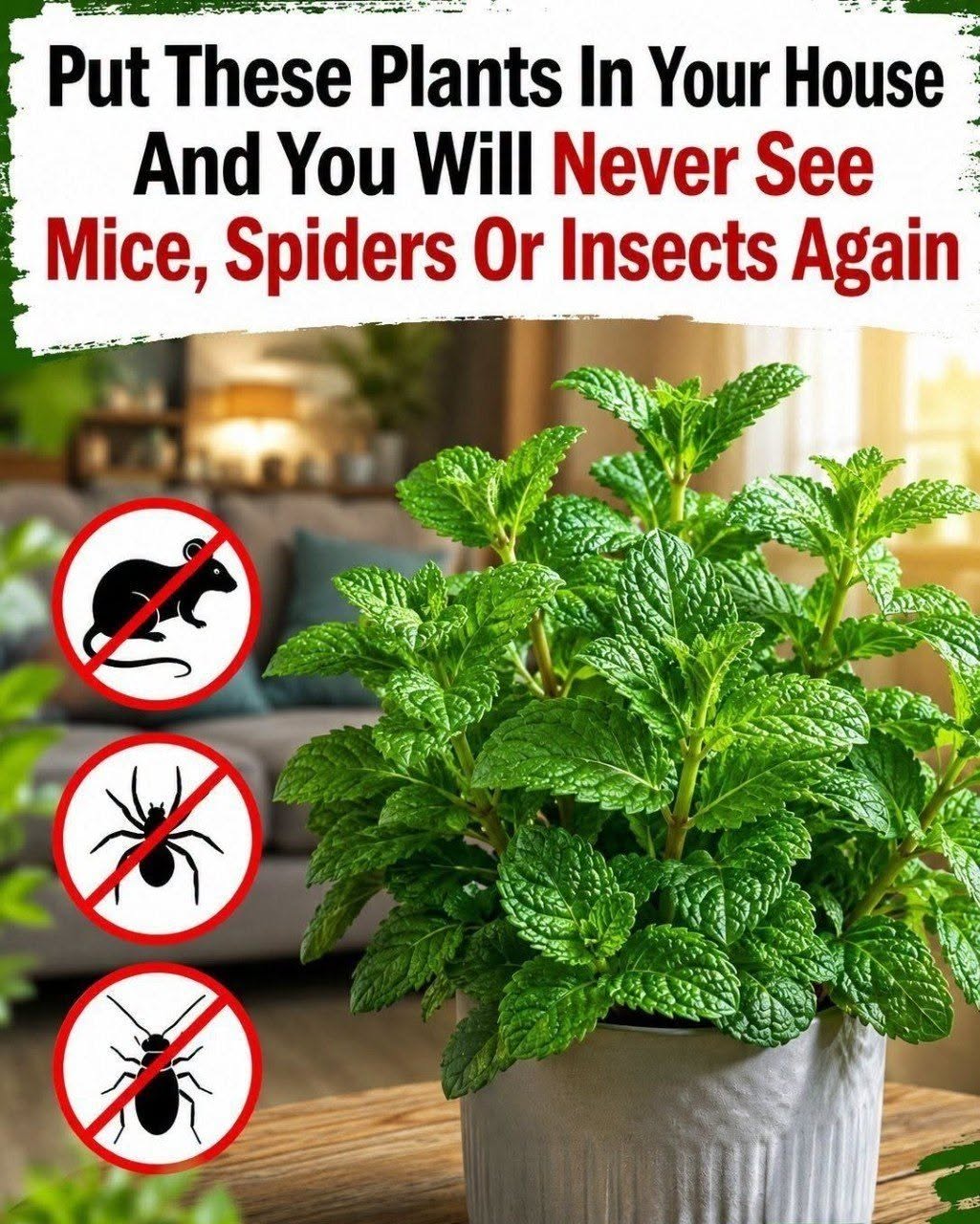
Can These Plants Really Keep Mice Away?
This is one of the most common claims attached to aromatic plants online, and it deserves a realistic answer.
Mice have a highly developed sense of smell, and intense odors may make particular locations temporarily less attractive. But a hungry mouse will not necessarily abandon a warm house containing accessible food simply because mint or lavender is growing outside.
If you have signs of mice indoors, plants should not be your primary defense.
The Most Effective Mouse-Prevention Basics
Inspect the exterior of your home for gaps and openings, particularly around pipes, doors, vents, foundations, garages, and utility lines.
Store grains, pet food, birdseed, and other attractive foods in secure containers.
Clean crumbs and spills promptly.
Reduce clutter that provides hiding places.
Keep vegetation and accumulated debris from creating sheltered pathways immediately against the house.
If mice are already present, appropriate trapping or professional pest management may be necessary.
What About Spiders?
Spiders are often grouped together with insects, although they are arachnids rather than insects.
Most household spiders are searching for shelter and prey rather than attempting to interact with people.
If your property has large numbers of flies, mosquitoes, moths, and other insects, spiders have a readily available food supply.
Reducing that food supply can therefore indirectly make certain areas less attractive to spiders.
Simple Ways to Reduce Indoor Spider Activity
Repair damaged window and door screens.
Seal obvious cracks and gaps.
Vacuum webs and egg sacs when found indoors.
Reduce clutter in quiet storage areas.
Check outdoor lighting, because lights that attract large numbers of flying insects may indirectly create good hunting areas for spiders.
Don’t Forget Standing Water
If mosquitoes are your biggest concern, planting aromatic herbs is only one small part of the solution.
Removing standing water around the property can be particularly important because mosquitoes can breed in surprisingly small collections of water.
Regularly inspect buckets, plant saucers, clogged gutters, unused containers, toys, tarps, and other places where rainwater collects.
Birdbaths and other intentional water features should be maintained appropriately rather than simply forgotten for weeks.
A Smart Way to Arrange Your Pest-Conscious Garden
You do not need to fill every square foot with strongly scented herbs.
Instead, concentrate aromatic plants around the places people actually use.
For example, basil, rosemary, mint, and lemon thyme can be grown near an outdoor kitchen. Lavender and marigolds can brighten sunny pathways. Lemongrass or citronella grass can provide height around a patio. Catnip can be placed farther from the main seating area if visiting cats are likely to become overly enthusiastic about it.
This creates layers of fragrance and plant diversity without turning your garden into a single-purpose pest-control project.
Are Natural Plant Repellents Always Safer?
“Natural” does not automatically mean harmless.
Essential oils are highly concentrated substances and can irritate skin, eyes, or airways. Some can also be problematic for pets if swallowed, applied incorrectly, or heavily diffused in enclosed spaces.
A plant growing peacefully in the garden is not equivalent to a bottle of concentrated essential oil.
If you intend to apply a plant-derived product directly to your skin, use a properly formulated product and follow its label instructions.
What About DEET?
DEET is sometimes described online as inherently toxic or as a “neurotoxin” that should always be avoided. That characterization is misleading when discussing approved repellents used according to their directions.
DEET-containing insect repellents have a long history of use and can provide important protection against mosquitoes and ticks when used as directed.
People who prefer alternatives can also look for other appropriately registered repellent ingredients, depending on what is available in their country.
Garden plants can complement these measures, but they should not replace effective personal protection when mosquitoes or ticks pose a meaningful disease risk.
The Bottom Line
Basil, lavender, lemon thyme, lemongrass, rosemary, mint, marigolds, and catnip can all make beautiful additions to a garden designed with unwanted insects in mind.
Their aromatic compounds may discourage certain pests under some circumstances, and several plant-derived compounds have demonstrated repellent properties in scientific research.
But the strongest approach is a combination of methods.
Grow aromatic plants for fragrance and diversity. Remove mosquito breeding water. Keep doors and screens in good condition. Seal mouse entry points. Store food properly. Reduce clutter and use proven repellents when reliable personal protection is needed.
That balanced approach gives you something far better than a supposed miracle plant: a healthier, more thoughtfully managed outdoor environment.
And perhaps that is the greatest advantage of these eight plants. Even when no mosquito is around, you are still left with fresh basil for dinner, rosemary for roasted potatoes, mint for tea, lavender fragrance, colorful marigolds, and a garden that feels alive.
