
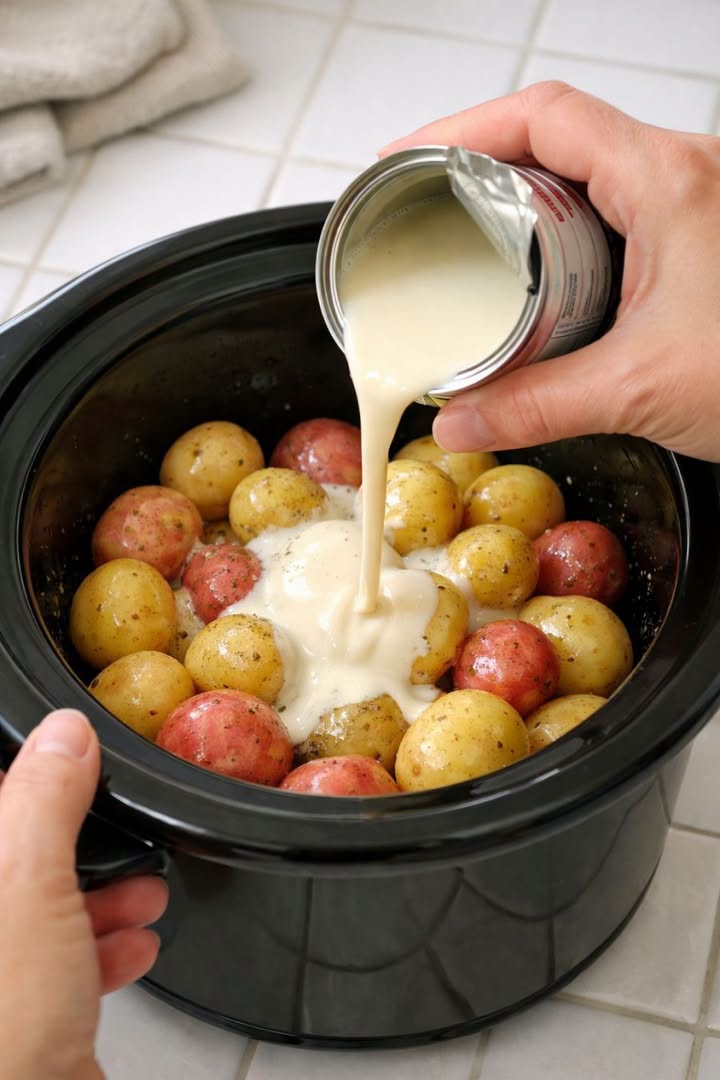
Finishing the Creamy Sauce
When the potatoes are fully tender, gently stir them from the bottom using a broad spoon.
Turn the potatoes carefully so they become coated with the warm evaporated milk and butter mixture without breaking apart unnecessarily.
As you stir, some starch from the potatoes will mingle with the liquid and may help the sauce become slightly thicker and silkier.
Taste the sauce and add another small pinch of salt if needed.
Leave the potatoes on the WARM setting for approximately 10 to 15 minutes before serving. This brief resting period can allow the sauce to thicken slightly as the potatoes settle.
Serve hot, spooning some of the creamy sauce over each portion.
Why Evaporated Milk Works Well Here
Evaporated milk is regular milk that has had part of its water removed, giving it a richer texture and more concentrated dairy flavor.
Because it is more concentrated than ordinary milk, it can create a creamier sauce without requiring heavy cream.
It is also convenient for pantry cooking because unopened cans keep well and can be stored until needed for recipes such as casseroles, soups, sauces, and slow cooker dishes.
During cooking, the evaporated milk combines with butter and potato starch to create a sauce that feels richer than the short ingredient list might suggest.
Choosing the Right Potatoes
Small baby potatoes are particularly convenient for this recipe because they require very little preparation and tend to hold their shape well during slow cooking.
Red baby potatoes, yellow potatoes, or small mixed-color potatoes can all work.
If using larger potatoes, cut them into evenly sized chunks so they cook consistently.
Very floury potatoes may soften more and release additional starch into the sauce, while waxier varieties generally remain firmer.
How to Tell When the Potatoes Are Done
The easiest way to check doneness is to pierce one of the larger potatoes with a fork or the tip of a small knife.
The utensil should slide into the center with little resistance.
If the potatoes are still firm, cover the slow cooker again and continue cooking in 15- to 30-minute increments until tender.
Avoid extending the cooking unnecessarily after they are fully tender, because very long cooking can eventually cause some potatoes to split or become overly soft.
For a Peppery Version
If you enjoy a little more seasoning, add about 1/2 teaspoon of freshly ground black pepper along with the salt.
Black pepper adds warmth and contrast without overpowering the mild flavor of the potatoes and dairy sauce.
For a Cheesier Sauce
For extra richness, stir in about 1/4 cup of grated Parmesan or a small handful of shredded cheddar during the last 10 minutes of cooking.
Stir gently until the cheese has melted into the warm sauce.
Because cheese can add saltiness, taste the dish before adding any extra salt.
Adding Fresh Herbs
Fresh herbs are optional but can brighten the finished dish.
Chopped parsley or chives work especially well because their mild flavor complements the potatoes without changing the character of the recipe.
Add fresh herbs just before serving so they retain their color and fresh aroma.
Adding Onion or Garlic
For additional savory flavor, place sliced onion or a few smashed garlic cloves beneath the potatoes before adding the evaporated milk.
The long cooking time softens the onion and garlic and allows their flavor to blend into the sauce.
This is an easy variation if you want a little more depth without introducing many additional ingredients.
Turning It Into a More Complete Meal
The base recipe works naturally as a side dish, but it can also become part of a more substantial one-pot supper.
Diced cooked ham can be stirred in near the end of cooking so it warms through and flavors the sauce.
Cooked shredded chicken is another convenient addition.
If using sausage, browning it separately first can improve its texture and flavor before adding it to the slow cooker.
Whenever adding meat, make sure it is handled and cooked appropriately according to the specific product you are using.
Vegetable Additions
Frozen peas can be stirred into the slow cooker during the final 10 to 15 minutes for a little color and sweetness.
Finely sliced carrots can also work, though they should be added earlier so they have enough time to soften.
Steamed broccoli is better added just before serving so it does not become too soft during prolonged slow cooking.
Serving Ideas
These creamy potatoes pair well with foods that provide texture or freshness.
Roast chicken, pork chops, ham, meatloaf, or grilled sausages all work as straightforward main dishes.
For vegetables, consider green beans, broccoli, peas, or a simple leafy salad with a vinaigrette.
The acidity in a tangy salad dressing can be especially helpful for balancing the buttery, creamy potatoes.
Warm bread is also a natural accompaniment if you want something to soak up the remaining sauce.
How to Store Leftovers
Transfer leftover potatoes and sauce to a covered container and refrigerate them promptly after the meal.
For best quality, use refrigerated leftovers within about 3 to 4 days.
The sauce may thicken noticeably in the refrigerator because the potatoes continue absorbing liquid.
How to Reheat
Reheat individual portions gently in the microwave or warm larger portions in a saucepan over low heat.
Add a small splash of milk, evaporated milk, or water if the sauce has become thicker than you prefer.
Stir occasionally and heat until the potatoes are thoroughly warmed through.
A Simple Pantry-Friendly Supper
This slow cooker potato dish is a good example of how a few basic ingredients can create something warm and satisfying.
There is no complicated sauce to prepare, no need to boil the potatoes first, and very little hands-on work after everything goes into the slow cooker.
The combination of baby potatoes, evaporated milk, butter, and salt produces a mild, creamy base that can be served exactly as written or adapted with cheese, herbs, vegetables, or leftover cooked meat.
For busy evenings, potluck meals, or days when you want a comforting side without using the oven, it is the kind of simple recipe that earns a regular place in the dinner rotation.
