
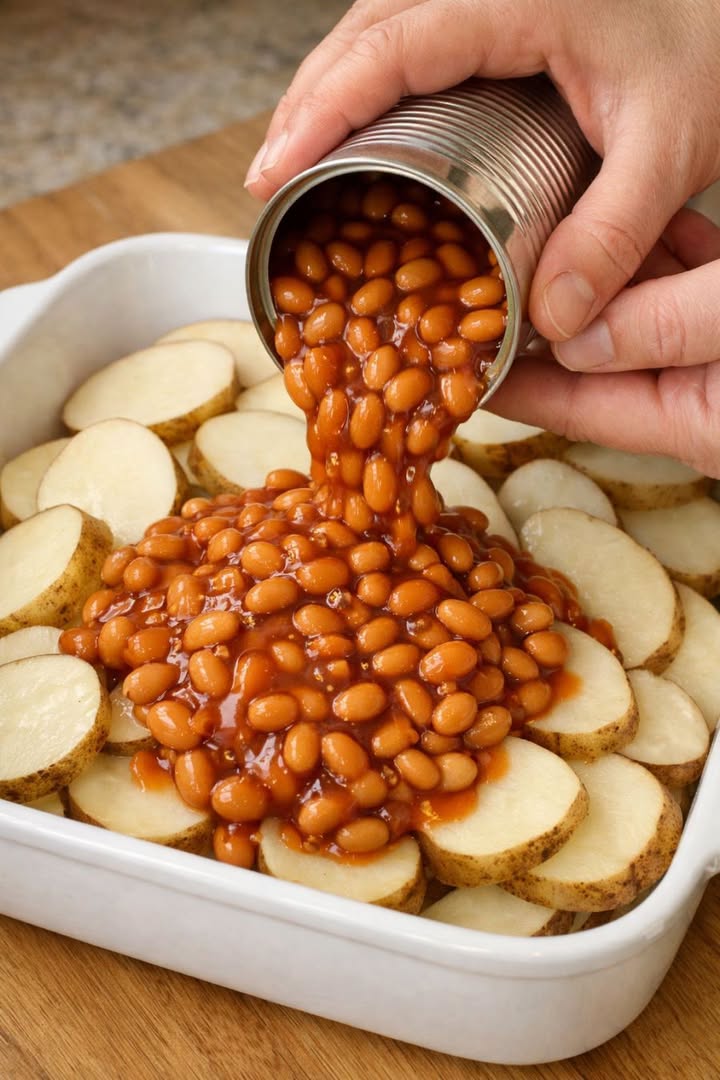
Adding the Cheese
Carefully remove the foil, watching for hot steam escaping from the dish.
Sprinkle the shredded cheddar cheese evenly over the hot beans and potatoes.
Return the casserole to the oven uncovered and bake for another 10 to 15 minutes, or until the cheese is fully melted, lightly browned in spots, and the casserole is bubbling.
Remove the baking dish from the oven and allow the casserole to rest for 5 to 10 minutes before serving.
This short resting period allows the sauce to settle and thicken slightly, making the casserole easier to scoop and serve.
Why Thin Potato Slices Matter
The thickness of the potatoes is one of the most important details in this recipe.
Russet potatoes can take a while to become tender in the oven, especially when surrounded by a thick sauce rather than boiling water.
Keeping the slices between approximately 1/8 and 1/4 inch thick helps them cook through during the covered baking time.
If the slices are much thicker, the beans and cheese may be hot and bubbling before the centers of the potatoes become soft.
A mandoline slicer can help create even slices, but a sharp chef’s knife works perfectly well. If using a mandoline, follow its safety instructions and use the hand guard.
Why the Dish Is Covered First
Covering the casserole with foil traps steam inside the dish.
That trapped moisture helps the raw potatoes soften while protecting the surface of the beans from drying or browning too quickly.
Once the potatoes are nearly tender, removing the foil allows excess moisture to escape and gives the cheese an opportunity to melt and develop a little color.
This two-stage baking method provides a better balance between tender potatoes and a nicely finished topping.
Choosing the Baked Beans
Almost any canned baked beans in tomato-based sauce can work in this recipe.
Traditional varieties produce a familiar sweet-savory flavor, while less-sweet baked beans create a more savory casserole.
If you enjoy smoky flavors, choose beans with a hickory-style seasoning or another smoky profile.
Keep in mind that different brands vary significantly in sodium and sugar, so taste and adjust the added seasoning accordingly.
For a Smokier Version
For more smoky flavor without changing the basic method, stir about 1 teaspoon of smoked paprika into the baked beans before pouring them over the potatoes.
You can also choose a smoky variety of baked beans rather than adding another ingredient.
If using beans flavored with bacon or another meat product, check the ingredient label if you are serving anyone with dietary restrictions.
Cheese Variations
Sharp cheddar gives the casserole a strong savory contrast to the slightly sweet baked beans.
If cheddar is not your favorite, Colby Jack or Monterey Jack will give you a milder, creamier topping.
Smoked cheddar can add another layer of flavor, while a mixture of cheddar and mozzarella creates a stretchier topping.
Whichever cheese you choose, shredded cheese melts more evenly than thick slices.
Using Yukon Gold Potatoes
Russet potatoes create a soft, hearty texture, but Yukon Gold potatoes also work well.
Yukon Golds tend to hold their shape better and have a naturally creamy texture.
Use the same thin slicing method and check them for tenderness toward the lower end of the baking range.
Making the Casserole Less Sweet
If your family prefers savory casseroles, choose baked beans labeled as reduced sugar or lower sugar.
You can also pair the dish with a tangy salad, vinegar-based coleslaw, or fresh tomatoes to balance the sweetness naturally.
A sharper cheese such as extra-sharp cheddar can also provide more savory contrast.
A Slightly Lighter Version
For a lighter variation, use a reduced-fat shredded cheese and choose baked beans with less added sugar.
You can also reduce the cheese slightly while still keeping enough on top to create a satisfying finish.
The potatoes and beans provide most of the body of the dish, so the casserole remains hearty even with less cheese.
How to Make It Ahead
You can assemble the casserole several hours before baking.
Grease the dish, layer in the potatoes, add the beans, cover tightly, and refrigerate for up to about 8 hours.
Wait to add the cheese until the covered baking stage is complete.
Because the casserole will be going into the oven cold, you may need to add approximately 10 minutes to the covered baking time.
Always check the potatoes with a knife rather than relying only on the clock.
Turning It Into a More Complete Supper
The basic casserole is filling enough to serve as a simple meal, but it also works well as a base for additional ingredients.
Diced cooked ham can be layered with the potatoes for extra savory flavor.
Cooked sausage can also be added, especially if you want a smoky or breakfast-style variation.
Leftover shredded chicken is another option that works well with the beans and cheese.
If adding meat, use meat that has already been safely cooked unless you are following a separate recipe specifically designed for cooking raw meat in the casserole.
Vegetable Additions
A layer of thinly sliced onion can be added with the potatoes for extra flavor.
Frozen corn can be stirred into the beans before baking, while diced bell peppers add sweetness and color.
For a greener version, serve broccoli, green beans, or a salad alongside rather than adding delicate vegetables directly to the casserole, where they may overcook.
What to Serve With the Casserole
A bright, acidic side dish is especially helpful with a casserole built around potatoes, beans, and cheese.
Try a green salad with vinaigrette, cucumber and tomato salad, or vinegar-based coleslaw.
Steamed broccoli and green beans are easy vegetable options.
For bread, cornbread, dinner rolls, or crusty slices of country bread all work well with the saucy bean mixture.
How to Tell When It Is Fully Cooked
The beans bubbling around the edges is a good indication that the casserole is hot, but potato tenderness is the more important test.
Insert the tip of a knife into one of the thickest potato slices near the center of the dish.
If the knife slides through easily, the potatoes are ready.
If you still feel significant resistance, cover the casserole again and continue baking for another 10 to 15 minutes before checking once more.
Storing Leftovers
Allow leftovers to cool briefly, then transfer them to a covered container and refrigerate promptly.
For best quality, use refrigerated leftovers within about 3 to 4 days.
The sauce may thicken in the refrigerator because the potatoes continue absorbing moisture.
Reheating
Individual portions reheat easily in the microwave.
For larger amounts, place the casserole in an oven-safe dish, cover loosely with foil, and warm at a moderate temperature until heated through.
If the casserole seems dry after refrigeration, adding a spoonful of water or extra baked bean sauce before reheating can help restore some moisture.
A Simple Dump-and-Bake Dinner
This baked bean and potato casserole is appealing because it requires very little preparation and relies on inexpensive, familiar ingredients.
There is no need to boil the potatoes first, prepare a separate sauce, or use several pots and pans.
The beans provide both seasoning and moisture, the potatoes make the dish filling, and the melted cheddar gives the top a warm, savory finish.
Whether you serve it as a meatless supper, a hearty side dish, or a base for leftover cooked meat, it is an easy oven meal that can be adapted without losing the simplicity that makes it so useful.
