
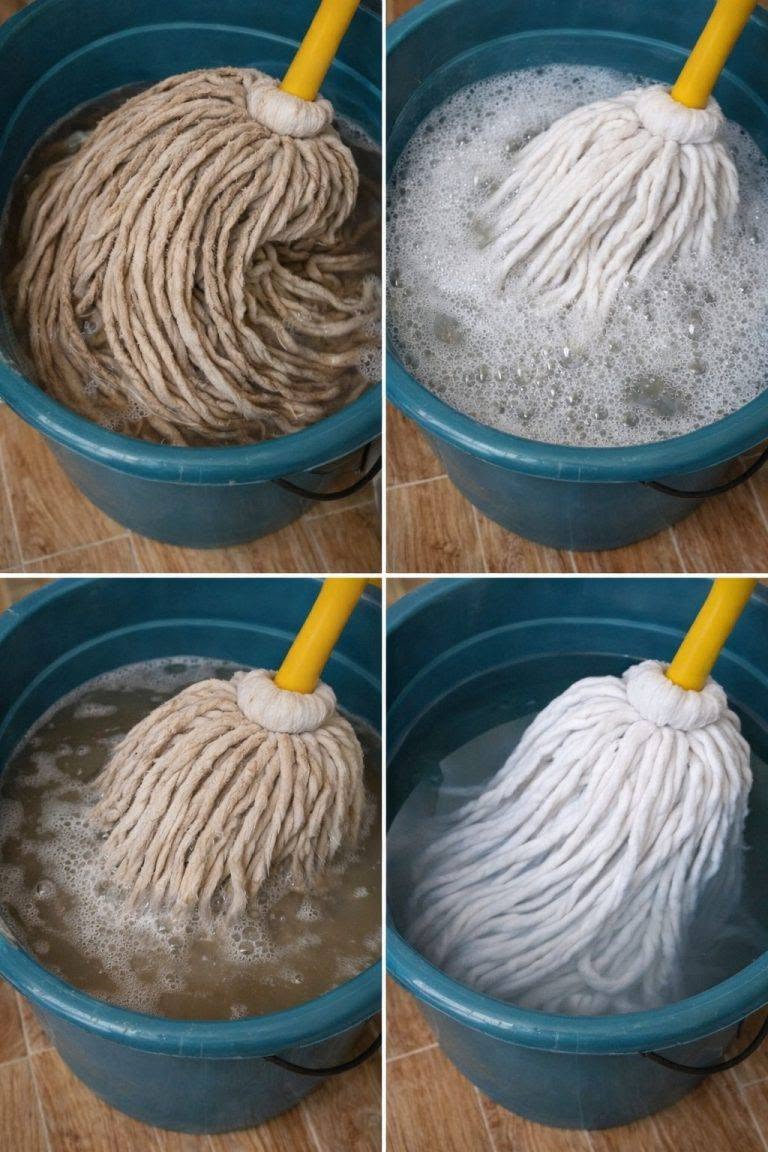
How to Clean a Microfiber Mop
Microfiber works well because its fine fibers trap dust and dirt efficiently, but those fibers can also hold residue.
After each use:
- Remove loose debris.
- Rinse the mop head.
- Machine wash if permitted.
- Use regular detergent.
- Avoid fabric softener unless the manufacturer specifically allows it.
Fabric softener can coat microfiber and reduce its ability to absorb water and pick up dirt.
How to Clean a Cotton String Mop
Cotton mop heads can usually tolerate more vigorous rinsing than microfiber.
Rinse thoroughly after use, then soak in warm soapy water if necessary.
If the mop head is removable and machine washable, laundering it periodically can remove deeper residue.
Allow the strands to separate and dry fully before storing.
How to Clean a Sponge Mop
Sponge mop heads require more caution because they can deteriorate or crack over time.
Rinse after every use and gently squeeze out dirty water.
Avoid excessively hot water unless the manufacturer approves it.
If the sponge begins crumbling, develops deep stains that do not wash away, or smells persistently unpleasant despite cleaning, replacement is usually the better choice.
When a Mop Really Should Be Replaced
Cleaning can restore many mop heads, but not every mop lasts forever.
Replace the mop head if:
- The fibers are badly frayed or falling apart.
- The sponge is cracked or disintegrating.
- The attachment mechanism is damaged.
- There is visible mold that cannot be removed.
- A strong unpleasant smell remains after thorough washing and drying.
- The mop no longer cleans effectively.
How Often Should You Wash a Mop?
A quick rinse should be done after every use.
Deeper washing frequency depends on how often the mop is used and what surfaces it cleans.
If you mop frequently, washing the removable head every few uses can help keep buildup under control.
Do Not Mop the Whole House With Filthy Water
One common mistake is continuing to use the same bucket of visibly dirty water throughout the entire home.
Once the water becomes very dirty, replace it.
Otherwise, you may simply redistribute soil across the floor instead of removing it.
Use Separate Tools for High-Risk Areas
If possible, avoid using the same mop head for the kitchen, bathroom, pet areas, and other heavily contaminated spaces without washing it between uses.
Some households find it helpful to keep separate washable mop heads for different rooms.
How to Prevent Bad Mop Odors
- Rinse immediately after use.
- Remove hair and debris.
- Wash periodically rather than waiting for heavy buildup.
- Never leave the mop soaking in dirty water overnight.
- Dry completely.
- Clean the bucket as well as the mop.
Do Not Forget the Mop Bucket
A clean mop placed into a dirty bucket will quickly become contaminated again.
After mopping, empty the bucket, wash it with detergent and water, rinse well, and allow it to dry.
Frequently Asked Questions
Can Baking Soda Make a Mop Look New Again?
It can help loosen dirt and neutralize odors, but it cannot restore fibers that are physically worn out.
Does Vinegar Disinfect a Mop?
Vinegar has some antimicrobial activity, but household vinegar should not be relied upon as a complete disinfectant when disinfection is necessary.
Use an appropriate labeled disinfectant if that is the goal.
Can I Use Bleach on a Mop?
Only if the manufacturer says the mop material is bleach-safe and you follow the bleach product label carefully.
Never mix bleach with vinegar, lemon juice, ammonia, or other cleaning products.
Can I Put Baking Soda Directly in the Washing Machine?
If the mop head is machine washable, a small amount of baking soda may be used in some laundry routines, but follow the washing machine and mop manufacturer’s instructions.
Regular detergent is usually still necessary for effective washing.
Is 70°C Necessary?
No universal temperature is appropriate for every mop.
Very hot water can damage some fibers and plastic components.
Use the highest temperature specifically permitted by the care label rather than choosing an arbitrary setting.
Why Does My Mop Still Smell After Washing?
Possible reasons include residue deep inside the fibers, incomplete rinsing, storing it damp, or a mop head that has simply reached the end of its useful life.
Can Essential Oils Replace Disinfectant?
No.
They may provide fragrance, but a few drops in cleaning water should not be treated as a substitute for a tested disinfectant.
Can I Mix All the Suggested Ingredients Together?
No.
Household cleaning ingredients should not be mixed casually.
In particular, never combine bleach with vinegar, lemon juice, or ammonia.
Using one cleaning method at a time is safer and usually more effective.
Best Everyday Mop-Care Routine
A simple routine can dramatically extend the usable life of a mop:
- Rinse immediately after mopping.
- Remove visible dirt and hair.
- Wash the mop head regularly.
- Rinse out all detergent.
- Dry thoroughly.
- Store in a clean, ventilated place.
Final Thoughts
A mop that looks gray, smells unpleasant, or feels loaded with residue does not automatically need to be thrown away.
Many washable mop heads can be restored surprisingly well with a thorough rinse, a proper wash, and enough drying time.
Baking soda can help loosen residue and reduce odors, while diluted vinegar or lemon can be useful for certain mineral deposits and smells.
However, there is no need to mix multiple household chemicals together.
Some combinations can be ineffective, and others can be dangerous.
Most importantly, never mix chlorine bleach with vinegar, lemon juice, ammonia, or unknown cleaning products.
If stronger sanitation is necessary, use a product specifically designed and labeled for that purpose and follow its directions exactly.
Finally, remember that drying is part of cleaning. Leaving a freshly washed mop damp in a bucket can quickly undo all your work.
Rinse it well, wash it properly, let it dry completely, and you may be able to keep using the same mop for much longer instead of replacing it unnecessarily.
