
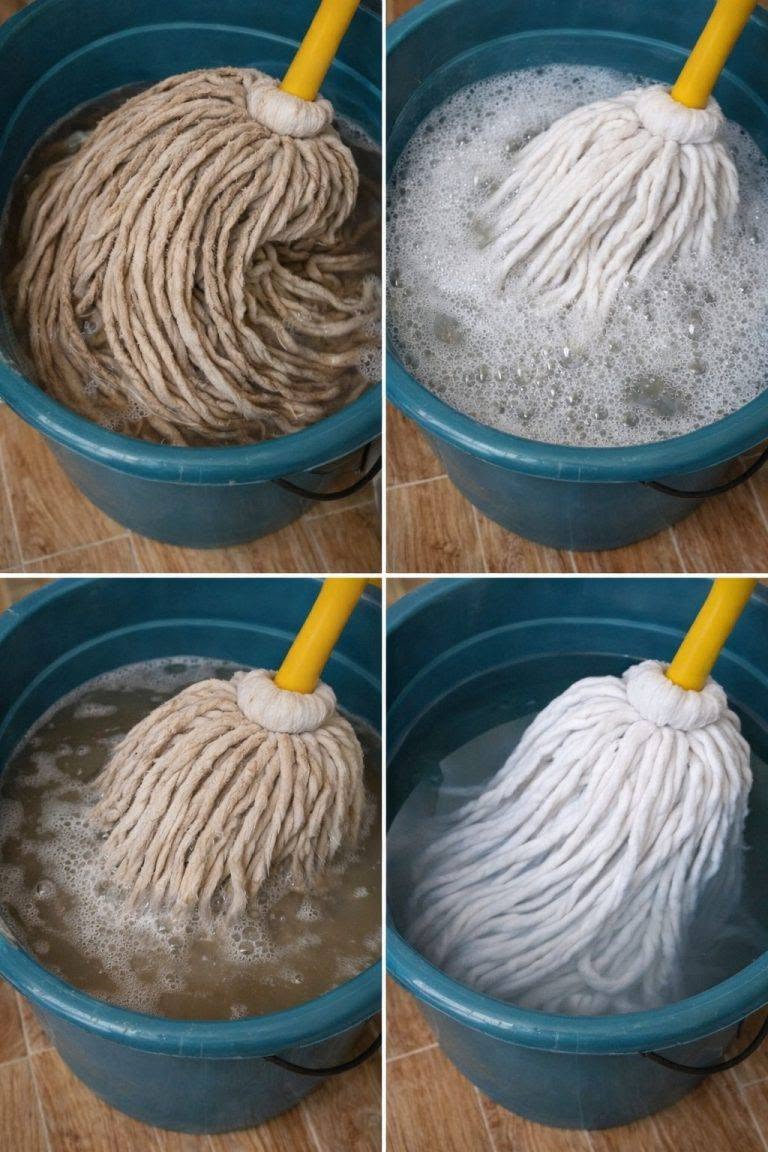
A mop can quickly become one of the dirtiest tools in the house. After repeated use, the fibers collect dust, grease, food residue, hair, and dirty water. If the mop is stored while still damp, unpleasant odors can develop as well.
Before replacing a mop that looks worn and dirty, it may be worth giving it a thorough cleaning. In many cases, simple household ingredients such as baking soda, vinegar, or lemon can help loosen grime and freshen washable mop fibers.
The most important steps are surprisingly simple: remove as much dirt as possible, wash the mop according to its material, rinse thoroughly, and allow it to dry completely before storing it.
Why Mops Become Dirty So Quickly
A mop is designed to collect dirt from the floor, so some buildup is inevitable. Every cleaning session can leave behind traces of grease, dust, detergent, and organic material inside the fibers.
If the mop is only rinsed quickly after use, some of that residue can remain trapped deep inside.
Moisture then creates the perfect conditions for musty odors to develop.
This is why a mop that appears clean when wet can smell unpleasant once it has been sitting in a bucket or utility room for a day or two.
First Step: Check the Care Label
Before soaking or washing the mop, check whether the mop head is removable and whether the manufacturer provides washing instructions.
Different materials tolerate different treatments.
- Microfiber mop heads are often machine washable.
- Cotton string mops may tolerate soaking and warm washing.
- Sponge mops may need gentler cleaning.
- Mops with glued components may be damaged by very hot water.
If the mop head is machine washable, following the manufacturer’s instructions is usually the safest option.
Baking Soda Method
Baking soda can help loosen residue and reduce unpleasant odors.
To use it, fill a bucket or basin with warm water and add approximately half a cup of baking soda.
Stir until most of the powder dissolves.
Place the removable mop head or cleaning cloths into the solution and allow them to soak for about 1 to 2 hours.
After soaking, rinse thoroughly with clean water until the water runs clear.
Why Baking Soda Can Help
Baking soda is mildly alkaline and can help loosen some types of greasy or acidic residue.
It also helps neutralize certain odors.
It should not, however, be treated as a guaranteed disinfectant. If the mop requires true disinfection, use a cleaning product specifically labeled for that purpose and suitable for the mop material.
Can You Wash a Mop Head in the Washing Machine?
If the care label allows it, many removable microfiber or cotton mop heads can be machine washed.
Use a normal detergent and the temperature recommended by the manufacturer.
Avoid automatically using extremely hot cycles unless the mop head is specifically designed to tolerate them.
High heat can damage microfiber, adhesives, plastic fittings, or elastic components.
A mop does not need harsh chemicals to become usable again. Thorough washing, complete rinsing, and proper drying are often the most important steps.
