
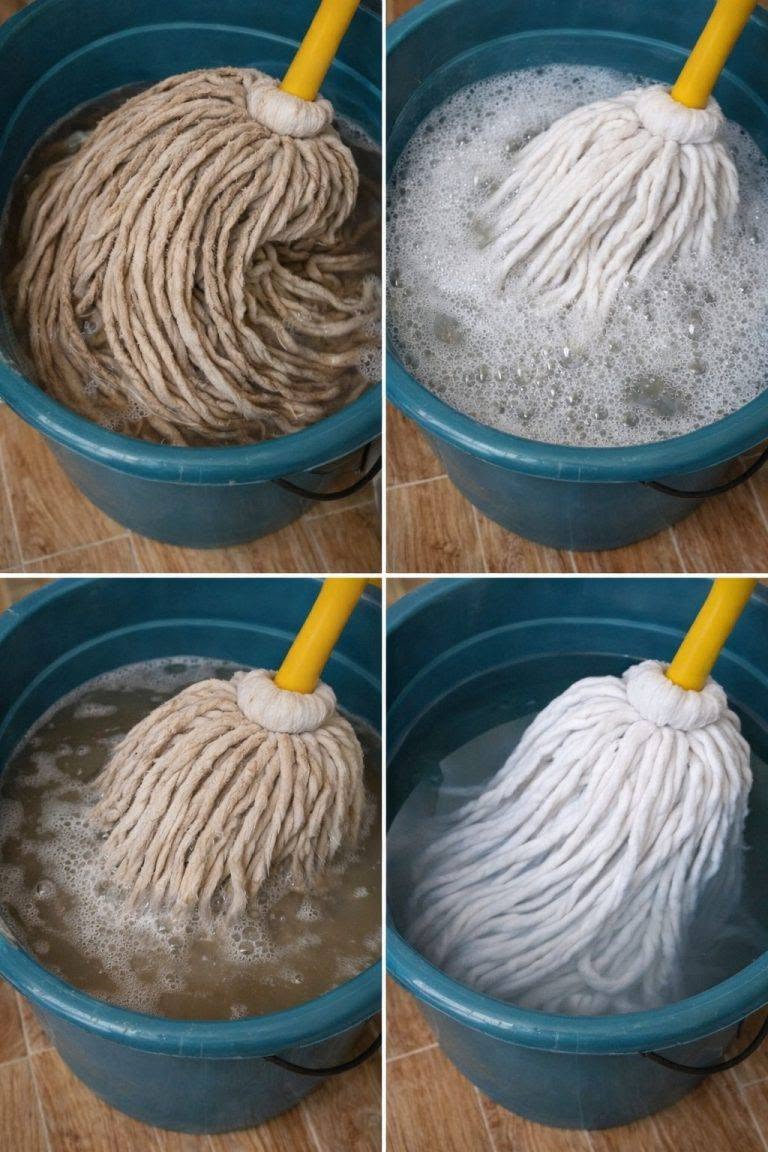
Vinegar Method for Odors and Mineral Residue
White vinegar can be useful for loosening mineral deposits and helping reduce some lingering odors.
Fill a bucket with warm water and add about 1 cup of white vinegar to several liters of water.
Soak the mop head for approximately 20 to 30 minutes.
Rinse thoroughly afterward with clean water.
Important: Do Not Mix Vinegar With Bleach
Never combine vinegar with chlorine bleach.
Mixing acidic products such as vinegar with bleach can release dangerous chlorine gas.
If bleach has been used previously, rinse the mop, bucket, and surrounding equipment thoroughly before using vinegar.
Should You Mix Baking Soda and Vinegar?
Baking soda and vinegar create a dramatic fizz when combined, but the reaction neutralizes much of the acidity and alkalinity that make the ingredients useful separately.
The bubbling can sometimes help loosen light surface debris, but combining them is not automatically a stronger cleaner.
For a dirty mop, it is usually more effective to use one method at a time and rinse thoroughly between treatments.
Lemon for a Fresher Smell
Lemon juice can leave a fresh citrus scent and its acidity can help with some residues.
Add the juice of 1 or 2 lemons to a bucket of warm water.
Soak the mop head for approximately 20 to 30 minutes, then rinse very thoroughly.
Lemon should be viewed mainly as a freshening and mild cleaning option rather than a reliable disinfectant.
Do Not Mix Lemon Juice With Bleach
Just like vinegar, lemon juice is acidic.
Never combine it with chlorine bleach or bleach-containing cleaners.
What About Ammonia?
Ammonia can cut through grease, but it requires much more caution than baking soda or vinegar.
If you use a commercial ammonia-based cleaner, follow the product label exactly and work in a well-ventilated area.
Wear gloves if recommended.
Never Mix Ammonia With Bleach
This is extremely important.
Ammonia and chlorine bleach must never be mixed.
The combination can produce toxic chloramine gases that may cause coughing, breathing difficulty, chest irritation, and serious injury.
Do not combine ammonia with unknown household cleaners either, since some may contain bleach.
Tea Tree Oil: Useful for Fragrance, Not a Substitute for Disinfection
Tea tree oil is often promoted online for its antimicrobial properties.
Laboratory studies have examined compounds in tea tree oil, but adding a few drops to a bucket of water should not be considered equivalent to using a registered disinfectant.
If you enjoy the fragrance and your mop material tolerates it, a few drops may be added to a cleaning solution after checking manufacturer guidance.
Keep essential oils away from children and pets, and avoid leaving concentrated oil directly on skin or household surfaces.
A Simple Cleaning Routine for a Very Dirty Mop
If your mop is heavily soiled, this straightforward routine is usually enough:
- Remove loose hair, dust, and debris from the mop head.
- Rinse thoroughly under warm running water.
- Soak in warm water with either baking soda or a suitable detergent.
- Agitate gently to release trapped dirt.
- Rinse repeatedly until the water runs clear.
- Wash in the machine if the manufacturer allows it.
- Dry completely before storage.
Why Rinsing Matters So Much
Cleaning products left inside mop fibers can attract additional dirt or leave residue on the floor during the next use.
Rinse until you no longer see foam, discoloration, or obvious product residue in the water.
Drying Is Essential
A mop should never be stored wet inside a closed bucket if it can be avoided.
After rinsing, squeeze or spin out as much water as possible.
Hang the mop head in a well-ventilated location or dry it according to the care instructions.
Proper drying helps prevent musty odors and slows microbial growth.
The step most people skip is also one of the most important: a freshly washed mop must dry completely before it goes back into storage.
