
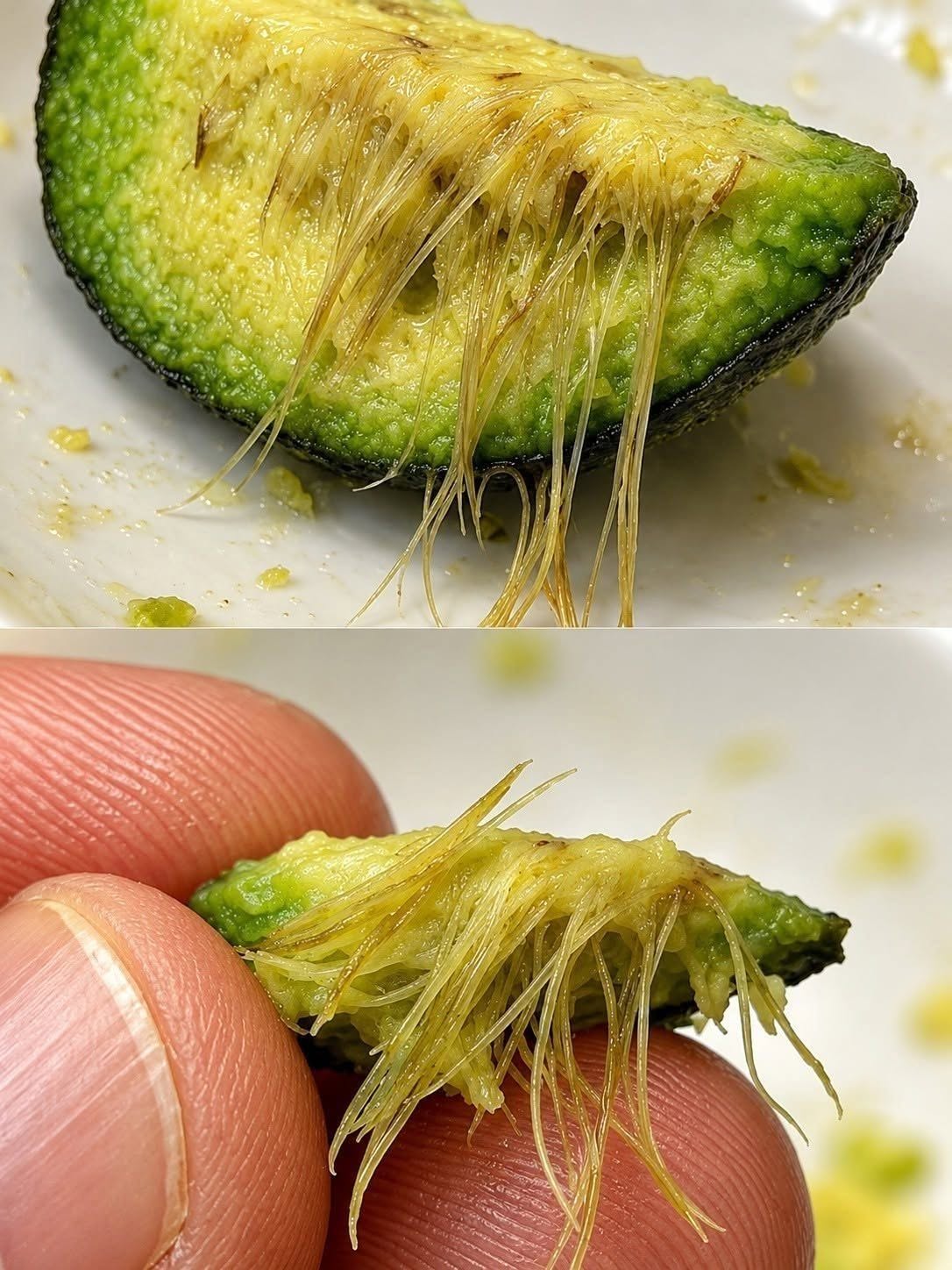
Are Stringy Avocados Safe to Eat?
In general, the presence of visible vascular fibers alone does not make an avocado unsafe.
If the flesh otherwise smells fresh, has a reasonably normal consistency, and shows no signs of mold or severe decomposition, the strings are usually just a texture issue.
You may find them unpleasant to chew, but they are part of the avocado’s natural tissue.
Can You Remove the Strings?
If only a few fibers are visible, you can often pull them away with the tip of a spoon or knife.
For heavily stringy fruit, removing each strand individually may not be worth the effort.
In that case, using the avocado in a mashed or blended recipe is often easier.
Turn It Into Guacamole
Mashing the avocado thoroughly can make the fibers much less noticeable.
Combine the flesh with ingredients such as:
- Fresh lime juice
- Salt
- Chopped tomato
- Onion
- Cilantro
- Garlic
- Chili pepper
Once mashed and mixed, minor stringiness may become almost impossible to notice.
Blend It Into a Smoothie
A high-speed blender can also break down the fibrous texture.
This works particularly well if the avocado is still fresh and flavorful but does not have the smooth consistency you expected.
Blend it with banana, berries, yogurt, milk, or another smoothie base.
Use It in a Creamy Dressing
Stringy but otherwise good avocado can also be blended with lemon or lime juice, herbs, olive oil, and a little water to create a creamy salad dressing.
Use It in Avocado Toast
Mash the avocado firmly with a fork before spreading it onto toast.
The additional ingredients and texture of the bread can make slight stringiness much less noticeable.
When Should You Throw an Avocado Away?
While strings alone are usually harmless, some signs indicate that an avocado has genuinely spoiled.
1. Visible Mold
If you see fuzzy white, green, gray, or black mold, discard the avocado.
Avocados are soft fruits, which means mold can extend deeper into the flesh than what is visible on the surface.
Simply cutting away the moldy section may not reliably remove all affected tissue.
2. A Sour or Rancid Smell
Fresh avocado has a very mild, slightly grassy or nutty aroma.
An unpleasant smell is a stronger warning sign than a few brown fibers.
Discard the fruit if it smells:
- Sour
- Fermented
- Rancid
- Strongly musty
- Otherwise noticeably unpleasant
3. Extensive Dark Flesh
A small brown patch is not always a problem.
Bruising and oxidation can produce localized discoloration.
However, if most of the flesh has turned very dark brown or black, especially when combined with an unpleasant smell or mushy texture, the avocado is probably past its best.
4. Watery or Slimy Texture
Overripe avocado flesh may become unusually watery, slimy, or excessively mushy.
If the texture seems decomposed rather than simply soft and creamy, it is safer to discard the fruit.
5. Fermented Flavor
If you taste a tiny amount and notice a sour, alcoholic, or fermented flavor, do not continue eating it.
A normal ripe avocado should taste mild, creamy, and slightly nutty.
Brown fibers are usually harmless, but mold, unpleasant odor, sliminess, widespread dark breakdown, or fermented flavor are much stronger reasons to discard the fruit.
