
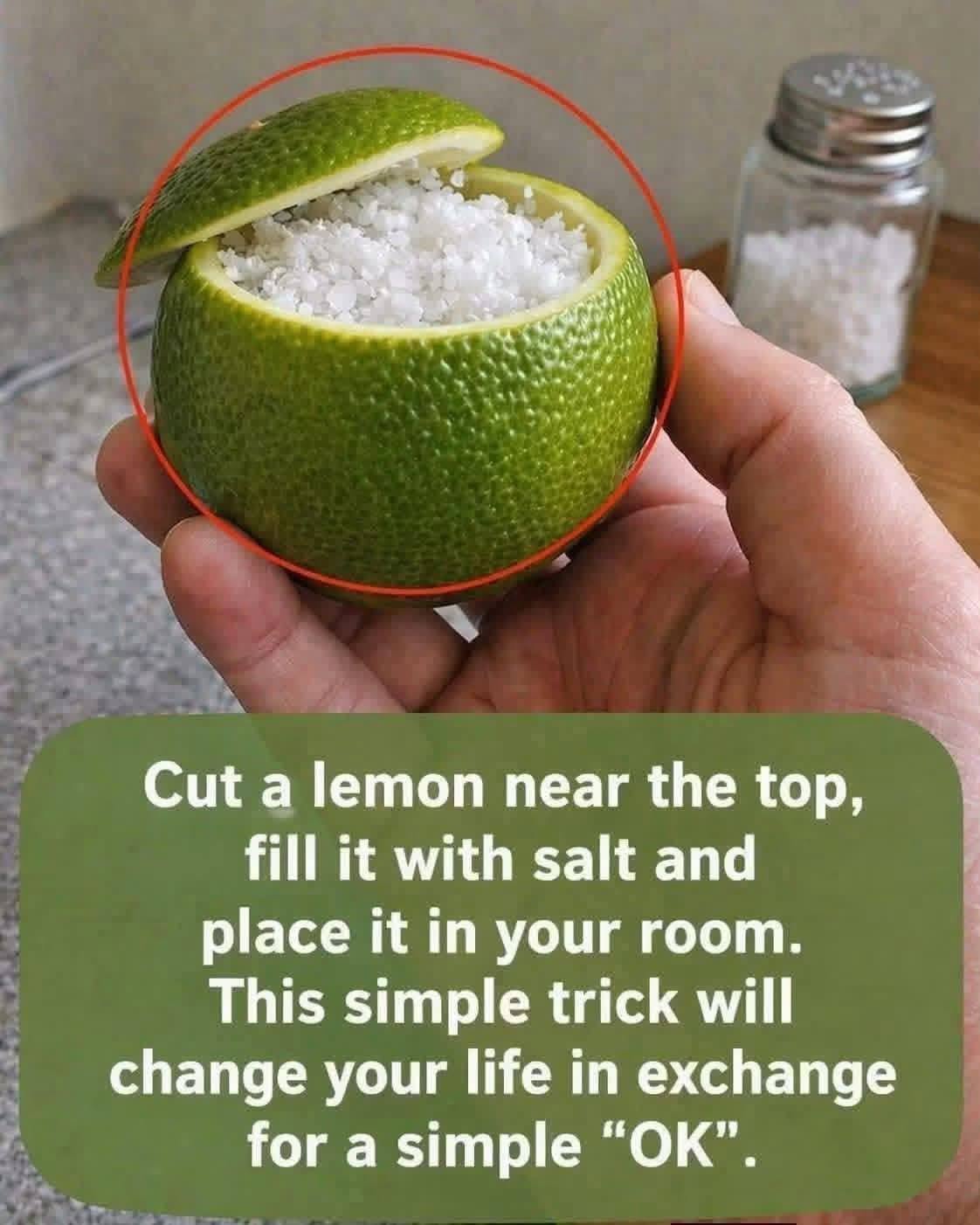
Can You Put It Beside the Bed?
You can place it in a bedroom if you enjoy the fragrance and tolerate citrus scents well.
Some people find pleasant familiar aromas relaxing, especially when they are part of a calming bedtime environment.
However, there is no strong evidence that salted lemon directly improves sleep, treats insomnia, or changes oxygen levels in a bedroom.
Can Citrus Aroma Improve Mood?
Smell is closely connected with memory and emotion, so pleasant aromas can influence how a room feels.
Some people describe citrus scents as fresh, bright, or uplifting.
This is better understood as an aroma and sensory effect rather than a medical treatment for stress, anxiety, or depression.
Important Safety Tips
Although the trick is simple, a few precautions are worth following.
- Keep the lemon on a plate to protect surfaces.
- Discard it if mold appears.
- Do not allow pets to chew or eat it.
- Keep essential oils away from children and pets.
- Wash hands after handling spoiled fruit.
- Do not reuse the lemon for food or drinks.
- Do not place it near electrical equipment where leaking juice could cause damage.
Why You Should Not Eat the Lemon Afterwards
Once a cut lemon has been sitting exposed at room temperature for several days, it should be treated as a household item rather than food.
It may have collected dust and microorganisms, and the exposed pulp can begin to spoil.
Discard it when you are finished using it.
A Note About “Antiseptic” Claims
Salt and citric acid can inhibit certain microbes under specific conditions, and lemon compounds have demonstrated antimicrobial activity in laboratory studies.
However, placing salt inside a lemon does not sterilize or disinfect an entire room.
If you need to disinfect a surface, use an appropriate cleaning or disinfecting product according to its instructions.
Nutrition of Fresh Lemon
Fresh lemon is nutritious when consumed as food.
It provides vitamin C and small amounts of several other nutrients.
However, nutritional information is not particularly relevant to this household use because the lemon should not be eaten after sitting exposed as a room freshener.
Is Himalayan Salt Better?
No special type of salt is required.
Coarse sea salt, kosher salt, or another coarse culinary salt can work.
Himalayan pink salt may look decorative, but there is no evidence that it provides superior air-freshening or purification effects.
Can Baking Soda Be Added?
Baking soda is commonly used for odor control in enclosed spaces such as refrigerators.
You can place a separate small bowl of baking soda nearby, but mixing large amounts directly into the wet lemon is unnecessary.
Does the Salt Need to Be Replaced?
If the salt becomes extremely wet while the lemon still looks fresh, you can replace some of it.
However, once the fruit itself begins deteriorating, replacing the salt will not restore it.
Discard the entire lemon and prepare a fresh one.
Frequently Asked Questions
Does Salted Lemon Kill Germs in the Air?
There is no reliable evidence that it disinfects the air in a room.
Does It Remove Mold Spores?
No.
Visible or suspected indoor mold requires moisture control, cleaning, and sometimes professional remediation depending on the extent of the problem.
Can It Replace an Air Purifier?
No.
A proper air purifier mechanically filters air. A lemon does not.
Can It Remove Cigarette Smoke?
It may temporarily mask some odor, but it does not remove fine smoke particles or the health risks associated with tobacco smoke.
Can It Remove Cooking Smells?
It may add a pleasant citrus fragrance, but ventilation and cleaning are more effective for strong cooking odors.
How Many Lemons Should I Use?
One is enough for a small area.
Two or three may create a stronger fragrance in a larger room, although more fruit also means more material that must be monitored for spoilage.
How Often Should I Replace Them?
Check them daily and replace them whenever they begin to smell unpleasant, develop mold, or lose their fresh citrus aroma.
Can I Use Limes or Oranges?
Yes.
The same decorative idea can be tried with other citrus fruits, although the scent will differ.
Is This Better Than Artificial Air Freshener?
That depends on your goal.
If you simply want a mild natural citrus aroma and prefer not to use strongly fragranced sprays, it can be a pleasant option.
If you need actual filtration or removal of pollutants, it is not an alternative to proper air-quality measures.
Simple Ways to Keep a Room Smelling Fresh
A salted lemon works best when combined with basic housekeeping habits.
- Ventilate rooms regularly when conditions allow.
- Wash fabrics that hold odors.
- Empty trash before odors build up.
- Clean kitchen grease promptly.
- Keep sinks and drains clean.
- Address dampness and mold quickly.
- Wash pet bedding regularly.
Final Thoughts
The salted lemon trick is a charming example of how ordinary household ingredients can be used creatively.
A cut lemon filled with coarse salt can release a pleasant citrus aroma and create a fresh, simple fragrance without requiring a commercial spray.
What it should not be called is a true air purifier.
It does not reliably remove pollutants, toxins, allergens, mold spores, smoke particles, or dangerous gases from indoor air.
Its value is much simpler: it smells pleasant, looks attractive, costs very little, and can make a room feel fresher for a few days.
Prepare one with lemon and coarse salt, add cloves or cinnamon if you enjoy warmer fragrances, and place it somewhere with gentle airflow.
Check it regularly, discard it as soon as it begins to spoil, and remember that good ventilation and regular cleaning remain the real foundation of a fresh, healthy home.
