
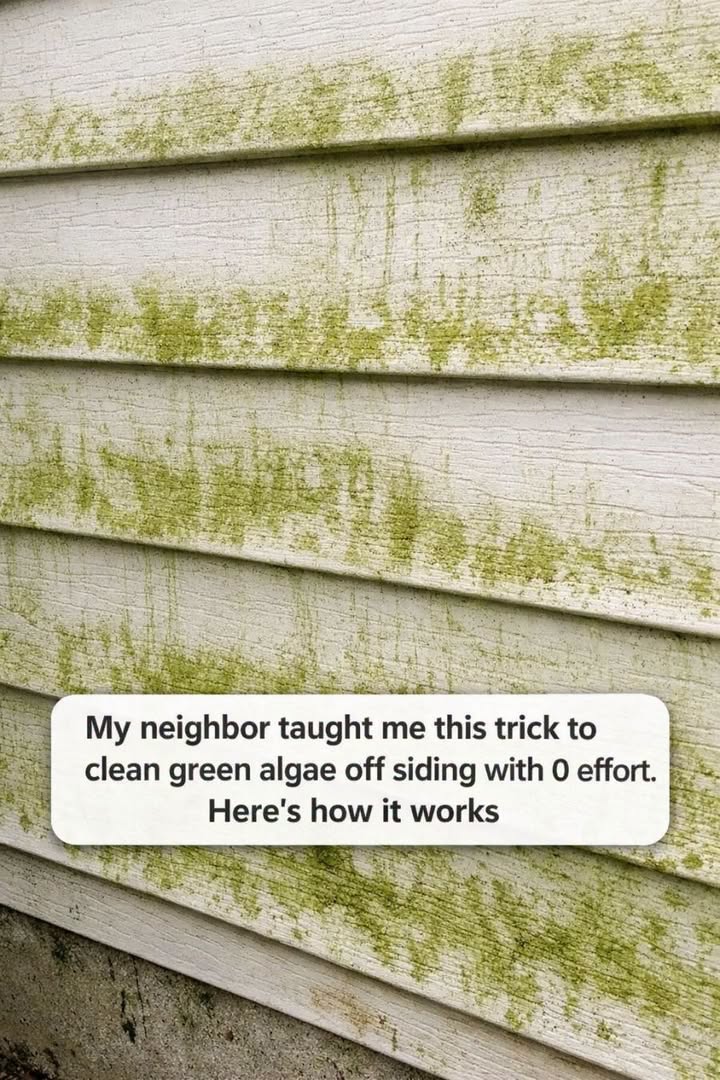
6. The “Let It Sit” Step That Reduces the Work
Once the cleaning solution has been applied, allow it to remain on the surface for approximately 15 to 30 minutes.
Do not allow the mixture to dry completely on the siding, especially in direct sunlight or warm weather. If necessary, work on smaller sections so you can rinse each area while it is still damp.
The soaking period helps loosen surface grime and light algae growth. Heavy or deeply established buildup may require a second application or gentle agitation with a soft exterior brush.
There is usually no advantage to leaving the mixture on for an hour if it begins drying. Longer contact is not always better and can increase the chance of streaking or affecting delicate finishes.
7. Rinsing the Algae Away
After the solution has had time to work, rinse the siding thoroughly with a garden hose.
Start near the top of the treated section and work downward so the dirty water flows over areas that have not yet been rinsed.
Use moderate water pressure rather than blasting water aggressively into the siding. High-pressure streams can sometimes force moisture behind panels, damage caulking, strip paint, or mark softer materials.
Light algae may rinse away easily. If some green patches remain, repeat the treatment or gently brush only those areas with a soft-bristled cleaning brush.
8. Protecting Plants, Pets, and Nearby Surfaces
Even mild cleaning mixtures should be used carefully around landscaping.
Before spraying the siding, thoroughly wet nearby plants, grass, and soil with clean water. This helps dilute any cleaner that may drip or splash onto them.
Cover especially delicate plants if you are treating a large section of wall, and rinse vegetation again when you are finished.
Keep children and pets away from the cleaning area until the siding and surrounding ground have been thoroughly rinsed and dried.
Also avoid spraying the mixture onto natural stone, unsealed masonry, metal fixtures, decorative finishes, or other sensitive materials without first checking whether vinegar is appropriate for those surfaces.
9. How Long the Results May Last
There is no fixed amount of time that siding will remain algae-free after cleaning.
In a dry, sunny location with good air circulation, the siding may stay clean for a long period. In a humid or heavily shaded area, green growth can begin returning sooner.
Instead of following a rigid cleaning schedule, inspect problem areas periodically and clean them when you first notice light discoloration. Early treatment is usually easier than waiting until the buildup becomes thick and widespread.
10. Simple Ways to Help Prevent Algae From Returning
Cleaning the siding addresses the visible growth, but changing the conditions that encourage algae can make an even bigger difference over time.
Trim shrubs and tree branches that press against the house or create constant shade. Better air circulation and more sunlight can help exterior surfaces dry faster after rain.
Check gutters and downspouts for leaks, clogs, or overflow. Water repeatedly running down the siding creates ideal conditions for algae and mildew-like staining.
Adjust lawn sprinklers so they do not regularly spray the house. Even a small amount of repeated moisture can keep one section of siding damp enough to encourage growth.
Occasionally rinsing away dust, pollen, and organic debris can also reduce the material that collects on the siding and supports recurring buildup.
11. When the Homemade Method Is Not Enough
Some exterior staining can be more stubborn than ordinary green algae. Dark staining, thick biological growth, or discoloration that quickly returns may require a product specifically formulated for exterior siding.
If you use a commercial siding cleaner, follow the label instructions carefully and confirm that it is compatible with your type of siding and finish.
For older homes, damaged siding, peeling paint, extensive staining, or high areas that cannot be reached safely, professional cleaning may be the better option.
Pressure washing can sometimes be effective, but it should be done with the appropriate pressure, distance, angle, and equipment. Improper technique can damage siding or force water into places where it should not go.
The Bottom Line
This neighbor-taught method works because it gives a mild cleaning solution time to loosen green buildup before rinsing, reducing the need for vigorous scrubbing.
A simple mixture of water, a modest amount of white vinegar, and mild dish soap may be useful for light to moderate algae on compatible surfaces. Testing first, protecting nearby plants, avoiding excessive pressure, and following the siding manufacturer’s cleaning recommendations are all important.
And perhaps the most useful lesson is that prevention matters just as much as cleaning. Improving sunlight, airflow, drainage, and moisture control around the home can make green siding far less likely to become a recurring problem.
