
How to Tell Burnt Grease From Healthy Seasoning
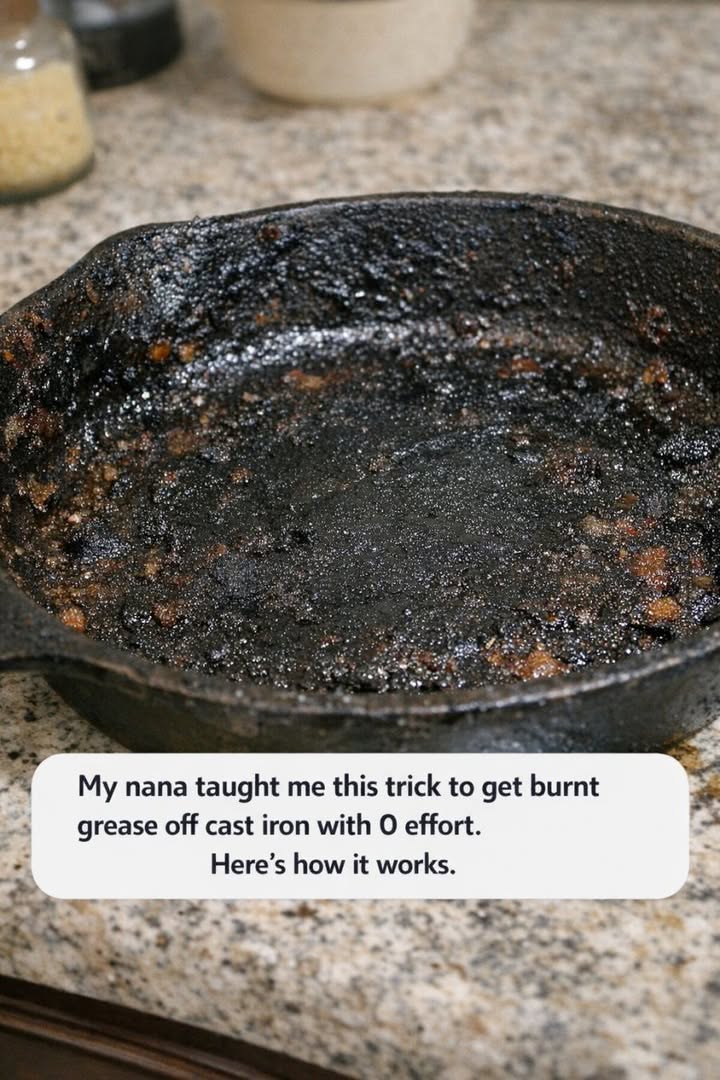
Healthy seasoning usually looks dark, relatively smooth, and firmly bonded to the pan.
Burnt buildup may look:
- Raised
- Flaky
- Sticky
- Uneven
- Crusty
If pieces are peeling off onto food, that surface needs attention.
What About Rust?
Rust usually appears orange, reddish-brown, or powdery.
Salt alone may not be enough for significant rust.
Light rust can often be removed with a more abrasive scrubber, followed by immediate drying and reseasoning.
For badly rusted pans, a full restoration may be more appropriate.
Can You Use Baking Soda?
Baking soda can help with some food residue, but it is not always necessary for cast iron.
A mild baking soda paste may be useful for stubborn spots, but heavy scrubbing can also wear away seasoning.
Start with the gentlest method first.
Can You Use Vinegar?
Vinegar can dissolve rust, but it is acidic and can also attack bare cast iron if left in contact for too long.
It should not be used casually as an everyday cleaner for a seasoned skillet.
Short, controlled vinegar treatments are more appropriate for restoration projects than routine maintenance.
Can You Use Dish Soap?
Yes, when necessary.
The old rule that soap can never touch cast iron comes from a time when soaps were often much harsher.
A small amount of modern mild dish soap is generally fine for cleaning a properly seasoned skillet.
The important things are to avoid soaking, dry the pan immediately, and lightly oil afterward if needed.
Should You Use Steel Wool?
Steel wool is more abrasive and may remove seasoning.
It is useful when deliberately stripping damaged areas, treating rust, or restoring a neglected pan.
For routine cleaning, it is usually more aggressive than necessary.
Do Not Soak Cast Iron Overnight
Long soaking increases the chance of rust, especially if parts of the seasoning are thin or damaged.
Clean the pan, rinse briefly if necessary, and dry it immediately.
How to Prevent Burnt Grease From Building Up
The easiest cast iron pan to clean is the one that never gets heavily coated in residue.
A few habits make a big difference.
Clean Soon After Cooking
Once the pan is safe to handle, wipe or rinse away residue before it has time to harden.
Fresh grease is much easier to remove than grease that has been repeatedly reheated.
Do Not Leave Thick Oil in the Pan
After cooking, pour or wipe out excess grease.
Leaving a thick layer of oil behind does not improve seasoning.
It is more likely to become sticky or rancid.
Use Thin Layers When Seasoning
One of the most common seasoning mistakes is using too much oil.
After applying oil, wipe the skillet as though you were trying to remove almost all of it.
Very thin layers polymerize more evenly and are less likely to become sticky.
Dry the Pan Every Time
Never put away a damp cast iron skillet.
Towel drying followed by a minute or two of low heat is a reliable routine.
Store It in a Dry Place
If you stack cookware inside the skillet, consider placing a paper towel or cloth between pans to absorb small amounts of moisture and reduce scratching.
Why Does My Cast Iron Feel Sticky?
Sticky cast iron usually means excess oil was left on the surface during seasoning or storage.
The oil may have only partially polymerized.
Wash the surface gently, dry it thoroughly, and apply an extremely thin coat of oil.
Why Is My Cast Iron Flaking?
Flaking can happen when layers of carbonized food or poorly bonded seasoning build up over time.
If flakes are coming off during cooking, the surface may need deeper cleaning and reseasoning.
How Often Should Cast Iron Be Reseasoned?
There is no fixed schedule.
If the pan cooks well, looks healthy, and is not rusting, you do not need to constantly reseason it.
Regular cooking with oil naturally helps maintain the surface.
Can You Cook Acidic Foods in Cast Iron?
A well-seasoned pan can handle short cooking times with mildly acidic foods.
However, long simmering of highly acidic tomato sauces, wine, or vinegar-based dishes can weaken seasoning and sometimes create a metallic flavor.
A Simple After-Cooking Routine
- Remove leftover food.
- Wipe out excess grease.
- Rinse or wash gently if necessary.
- Use coarse salt for stubborn residue.
- Dry immediately.
- Warm briefly to remove moisture.
- Wipe with an extremely thin layer of oil.
Frequently Asked Questions
What Kind of Salt Works Best?
Coarse kosher salt works well because the crystals are large enough to provide gentle abrasion.
Can I Use Fine Table Salt?
You can, but it does not provide as much scrubbing action as coarse salt.
Should I Heat the Salt for 15 Minutes?
There is usually no need.
A few minutes of gentle warming is enough to soften many greasy residues.
Keeping an empty or salt-filled cast iron skillet over heat for an unnecessarily long time creates extra burn risk without much additional benefit.
Can I Use This Method Every Time I Cook?
You can use coarse salt when needed, but ordinary wiping or gentle washing is enough after many meals.
There is no reason to abrade the surface unnecessarily.
Will Salt Remove All the Seasoning?
Not if used gently.
Healthy seasoning is bonded to the iron and should tolerate light cleaning.
Aggressive, prolonged scrubbing can still wear it down.
What Oil Should I Use After Cleaning?
Common choices include canola oil, grapeseed oil, vegetable oil, or another neutral cooking oil.
The important part is applying an extremely thin coat.
Can I Put Cast Iron in the Dishwasher?
No.
Dishwasher detergent, prolonged moisture, and high-temperature washing can strip seasoning and encourage rust.
Can Cast Iron Really Last for Generations?
Yes.
Cast iron is extremely durable and can often be restored even after rust or neglect.
That is one reason old skillets are frequently passed down through families.
Final Thoughts
Burnt grease does not automatically mean your cast iron skillet needs harsh chemicals, aggressive steel wool, or a complete reseasoning.
For ordinary buildup, a handful of coarse salt, a little gentle warmth, and a careful wipe can often make cleaning much easier.
The key is to distinguish unwanted burnt residue from the healthy seasoning you actually want to preserve.
Clean gently, avoid prolonged soaking, dry thoroughly, and finish with only the thinnest film of oil.
With those habits, cast iron becomes far less intimidating to maintain.
And that may be the real wisdom behind old-fashioned kitchen tricks: not that they are magical, but that they use simple materials, patience, and just enough effort to solve the problem without creating a new one.
