
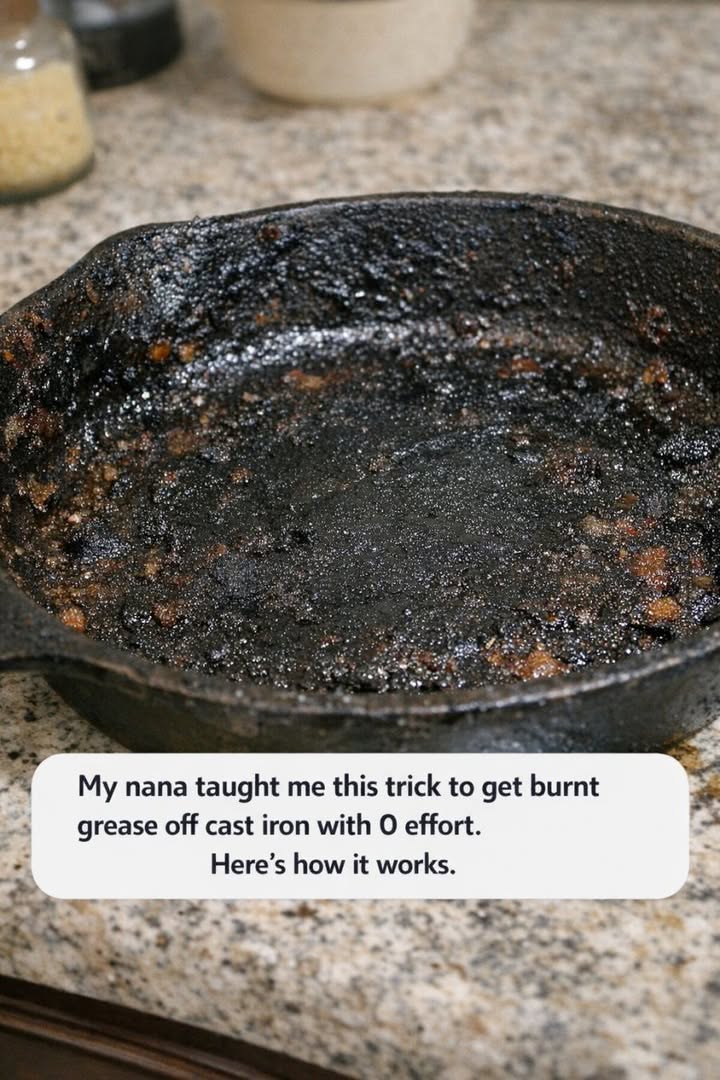
Step 4: Warm the Pan Gently
Place the skillet on the stove over low to medium-low heat.
Warm it for a few minutes, just enough to soften stubborn grease.
You do not need to heat the salt for 10 to 15 minutes or make the pan extremely hot.
Excessive heat is unnecessary and increases the risk of burns or smoke.
The goal is simply to warm the residue enough that it becomes easier to lift.
Step 5: Turn Off the Heat
Switch off the burner and allow the skillet to cool until it can be handled safely.
Do not begin wiping while the pan or grease is dangerously hot.
Step 6: Wipe With the Salt
Use a folded paper towel or clean cloth to move the salt gently across the greasy areas.
You do not need aggressive pressure.
The coarse crystals provide mild abrasion while the softened grease lifts away.
If necessary, use a wooden or silicone spatula to loosen a particularly stubborn spot.
Avoid digging into the seasoning with sharp metal tools.
Step 7: Discard the Dirty Salt
Once the grease has loosened, carefully wipe or pour the dirty salt into the trash.
Do not put large amounts of greasy residue down the drain.
Step 8: Rinse if Needed
If the pan still feels greasy or salty, rinse it briefly with warm water.
A small amount of mild dish soap is generally acceptable for modern seasoned cast iron when needed.
Proper seasoning is polymerized oil, so a little gentle soap will not automatically destroy it.
Avoid prolonged soaking.
Step 9: Dry Completely
Dry the skillet immediately with a clean towel.
Then place it over low heat for a few minutes to evaporate any remaining moisture.
This is one of the most important steps in cast iron care because standing water can encourage rust.
Step 10: Apply a Very Thin Layer of Oil
While the skillet is still slightly warm, add a tiny amount of neutral cooking oil.
Spread it across the surface with a paper towel, then wipe away the excess.
The pan should look lightly conditioned, not greasy or wet.
Too much oil can become sticky during storage.
Why the Salt Method Works
The method relies mainly on two simple principles.
First, heat softens greasy residue.
Second, coarse salt provides gentle abrasion that helps lift softened buildup from the surface.
It is not a chemical reaction or a magical dissolving process.
It is simply a controlled way of loosening and wiping away cooked-on material while reducing the need for harsh scrubbing.
Does Salt Absorb Grease?
Salt can pick up some surface grease as you wipe, but its biggest role here is mechanical rather than absorptive.
The coarse texture helps separate residue from the skillet.
Will Salt Damage the Seasoning?
Used gently, coarse salt is usually mild enough for routine cast iron cleaning.
However, aggressive scrubbing for a long period can wear away seasoning.
The key is to use only as much pressure as necessary.
When This Method Works Best
The salt method is especially useful for:
- Sticky grease
- Light burnt-on food
- Small rough patches
- Residue after frying
- Cooked-on bits that resist ordinary wiping
When the Salt Trick Is Not Enough
Sometimes a skillet has more than ordinary cooking residue.
If the surface has thick carbon buildup, widespread rust, peeling seasoning, or years of neglect, a deeper restoration may be necessary.
That may involve removing damaged seasoning and reseasoning the skillet from scratch.
If the surface is still rough after a gentle salt cleaning, the next question is whether you are dealing with food residue, damaged seasoning, or actual rust—because each problem needs a different fix.
