
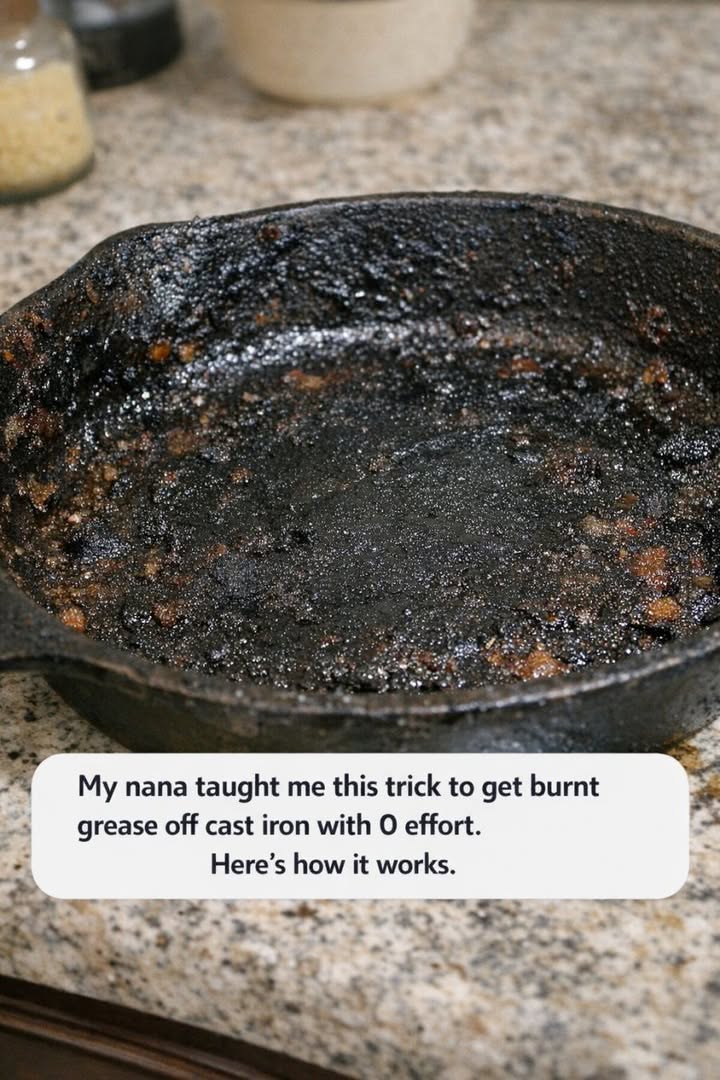
For many home cooks, a cast iron skillet is one of the most dependable tools in the kitchen. It holds heat beautifully, can last for generations, and becomes more useful as its seasoning develops.
But even a well-loved cast iron pan can eventually collect stubborn burnt grease and cooked-on residue. When that happens, the surface may start feeling rough, sticky, or uneven, and cleaning it can seem like a major chore.
My nana had a wonderfully simple approach: instead of attacking the pan with harsh cleaners and aggressive scrubbing, she used coarse salt, gentle heat, and patience to loosen the buildup.
The method is inexpensive, easy, and often effective for light to moderate burnt-on grease while helping preserve the pan’s seasoning.
Why Burnt Grease Builds Up on Cast Iron
Cast iron develops its cooking surface through seasoning, which is a thin layer of polymerized oil bonded to the metal.
That seasoning is useful. It protects against rust and gradually creates a smoother cooking surface.
Burnt grease is different.
When excess food residue, cooking fat, or sauces are repeatedly heated onto the pan, they can form raised, sticky, flaky, or carbonized patches.
This buildup may eventually:
- Make the cooking surface feel rough
- Create burnt or stale odors
- Transfer unpleasant flavors to food
- Cause food to stick unevenly
- Hide areas where seasoning needs attention
The Common Mistake: Scrubbing Too Aggressively
When people see blackened residue, the first instinct is often to attack it with steel wool or very harsh cleaning chemicals.
That can work, but it may also remove healthy seasoning along with the unwanted buildup.
For ordinary maintenance, a gentler method is usually worth trying first.
The Simple Pantry Staple: Salt
Coarse salt can work as a mild abrasive.
It has enough texture to help lift stuck-on residue without behaving like an extremely aggressive metal scrubber.
It is also inexpensive, easy to control, and already sitting in most kitchens.
Kosher salt or another coarse salt usually works better than very fine table salt because the larger crystals provide more gentle mechanical action.
What You’ll Need
- About ¼ cup coarse salt for a standard skillet
- A paper towel or clean cloth
- A wooden or silicone spatula
- A small amount of neutral cooking oil
- Warm water if needed
Step 1: Let the Pan Cool to a Safe Temperature
If the skillet has just been used, allow it to cool enough that you can handle it safely.
You do not need the pan to become completely cold, but it should never be so hot that touching or wiping it risks a burn.
Step 2: Sprinkle in the Salt
Pour a generous layer of coarse salt over the areas with cooked-on grease.
For a 10- to 12-inch skillet, about ¼ cup is usually enough.
Spread it across the bottom so the residue is covered.
Step 3: Let the Salt Sit Briefly
Leave the salt in the pan for a few minutes.
This gives you time to prepare the next step and allows the crystals to sit directly against the greasy areas.
The trick is not brute force—the next step uses gentle warmth to soften the grease so the salt can do most of the work for you.
