
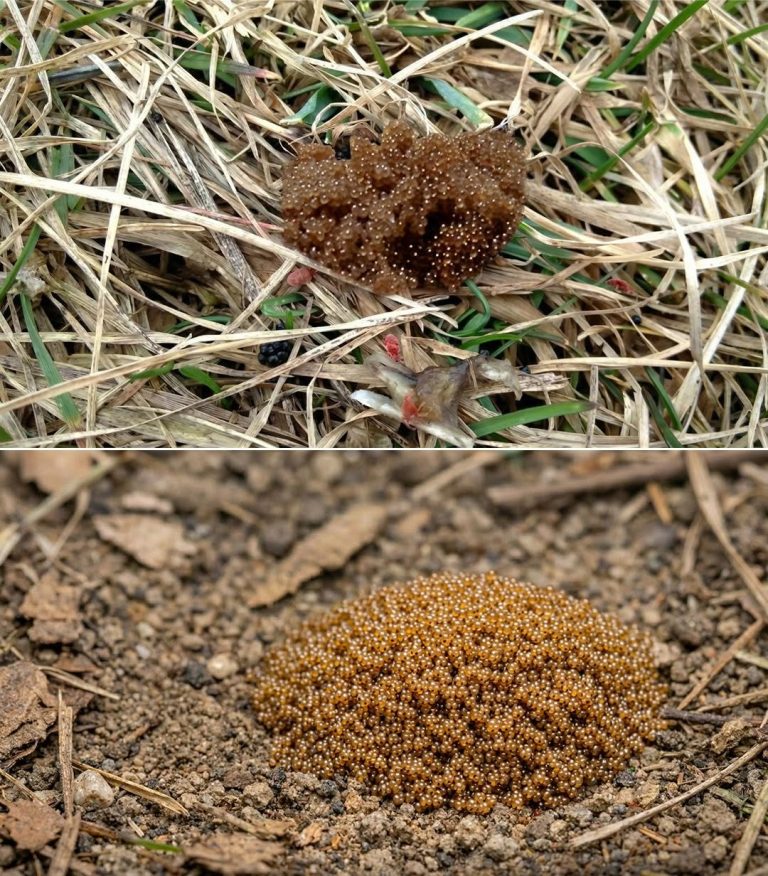
Discovering strange clusters of tiny eggs in your backyard can be alarming, especially when they may belong to ticks. These small parasites are known for spreading diseases to both humans and animals, making early identification and prevention extremely important.
While many articles online suggest drastic actions such as burning the eggs immediately, experts generally recommend a safer approach. Correct identification, careful removal, and proper yard maintenance are the most effective ways to reduce the risk of a tick infestation.
What Do Tick Eggs Look Like?
Tick eggs are extremely small, usually measuring around 0.5 millimeters in diameter, roughly the size of a poppy seed. They are typically oval-shaped and appear translucent, pale yellow, or light brown depending on the species and stage of development.
Female ticks often lay thousands of eggs at once, creating clusters that may resemble tiny beads or caviar. These clusters are commonly hidden in:
- Leaf litter
- Tall grass
- Under shrubs
- Wood piles
- Garden debris
- Moist, shaded areas
The eggs usually have a smooth and shiny appearance and remain attached to one another in large masses.
Why Tick Eggs Are a Concern
The real danger comes after the eggs hatch. A single female tick can lay thousands of eggs, producing large numbers of larvae that eventually mature into disease-carrying ticks.
Ticks are associated with several illnesses, including:
- Lyme disease
- Rocky Mountain spotted fever
- Anaplasmosis
- Ehrlichiosis
- Babesiosis
Reducing tick populations before the eggs hatch can significantly decrease the risk of future infestations around your home.
What To Do If You Find Suspected Tick Eggs
Do not touch the eggs with bare hands.
If possible:
