
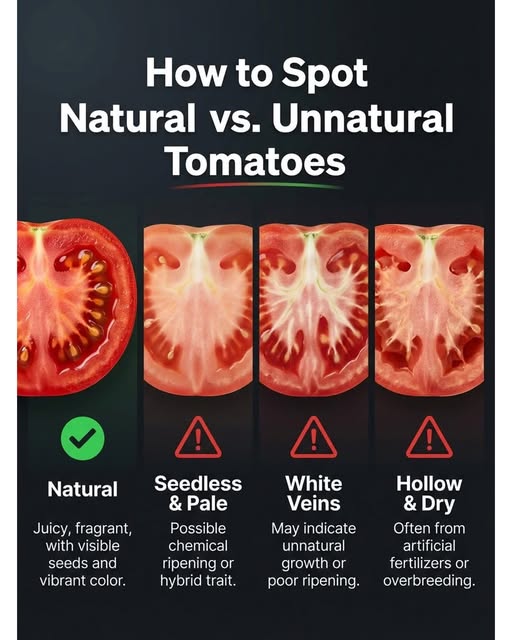
It’s tempting to assume the most flawless tomato is the best one. But nature rarely produces perfection—and that’s actually a good thing.
Small irregularities, minor blemishes, or uneven shapes often point to more traditional growing methods. These tomatoes may not look ideal, but they frequently deliver where it matters most: flavor.
In many cases, visual perfection comes from breeding and handling for durability, not taste.
Color and Texture: Better Clues to Ripeness
A high-quality tomato usually has a deep, rich color rather than a pale or overly uniform one. When you gently press it, it should feel:
- Firm enough to hold its shape
- Slightly soft, signaling ripeness
If it feels rock-hard, it was likely picked too early and ripened off the vine. That process often results in a tomato that looks ready—but tastes flat.
Don’t Forget to Smell It
Here’s a simple trick many people overlook: bring the tomato close to your nose, especially near the stem.
A good tomato will often have a subtle, earthy, slightly sweet aroma. That scent comes from natural compounds developed during proper ripening.
If there’s no smell at all, chances are the flavor will be just as muted.
