
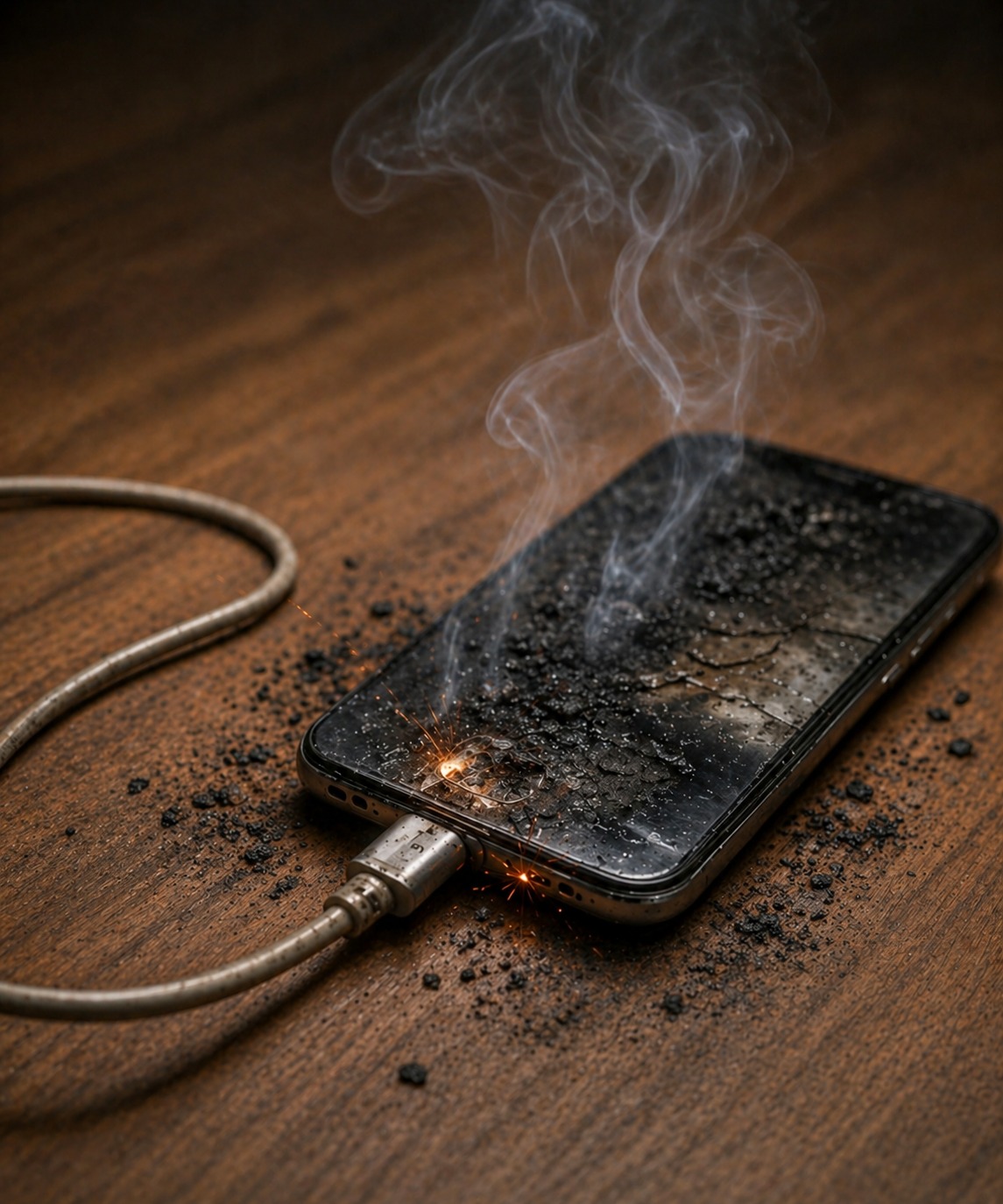
3. Damaged Cables: A Hidden Danger
Frayed or worn-out cables are often ignored because they still “work.”
But visible damage like:
- Exposed wires
- Loose connectors
- Broken insulation
can increase the risk of sparks, short circuits, or overheating.
Replacing damaged cables early is a simple but important safety step.
4. Unsafe Charging Habits
Some everyday habits can unintentionally create heat buildup.
Examples include:
- Leaving devices charging under pillows or blankets
- Charging on beds or sofas that block airflow
- Keeping devices plugged in unnecessarily for long periods
Heat is one of the main factors that affects both safety and battery health.
Charging on a hard, flat surface helps improve ventilation and reduces risk.
5. Electrical Outlet Safety
Even with a good charger, the power source matters.
Risks can increase when:
- Too many devices are plugged into one socket
- Extension cords are overloaded
- Wiring is old or damaged
Using surge protectors and ensuring outlets are in good condition helps maintain safer electrical usage at home.
6. Simple Safety Tips
A few small habits can significantly improve safety:
- Use certified chargers and cables
- Replace damaged equipment immediately
- Avoid charging under pillows or blankets
- Unplug chargers when not in use
- Keep chargers away from water and heat sources
7. Final Conclusion
Charger safety is often overlooked because it feels routine, but it plays an important role in everyday home safety.
Most risks come not from a single mistake, but from repeated small habits over time.
By using proper equipment and paying attention to how you charge your devices, you help protect both your electronics and your home environment.
