
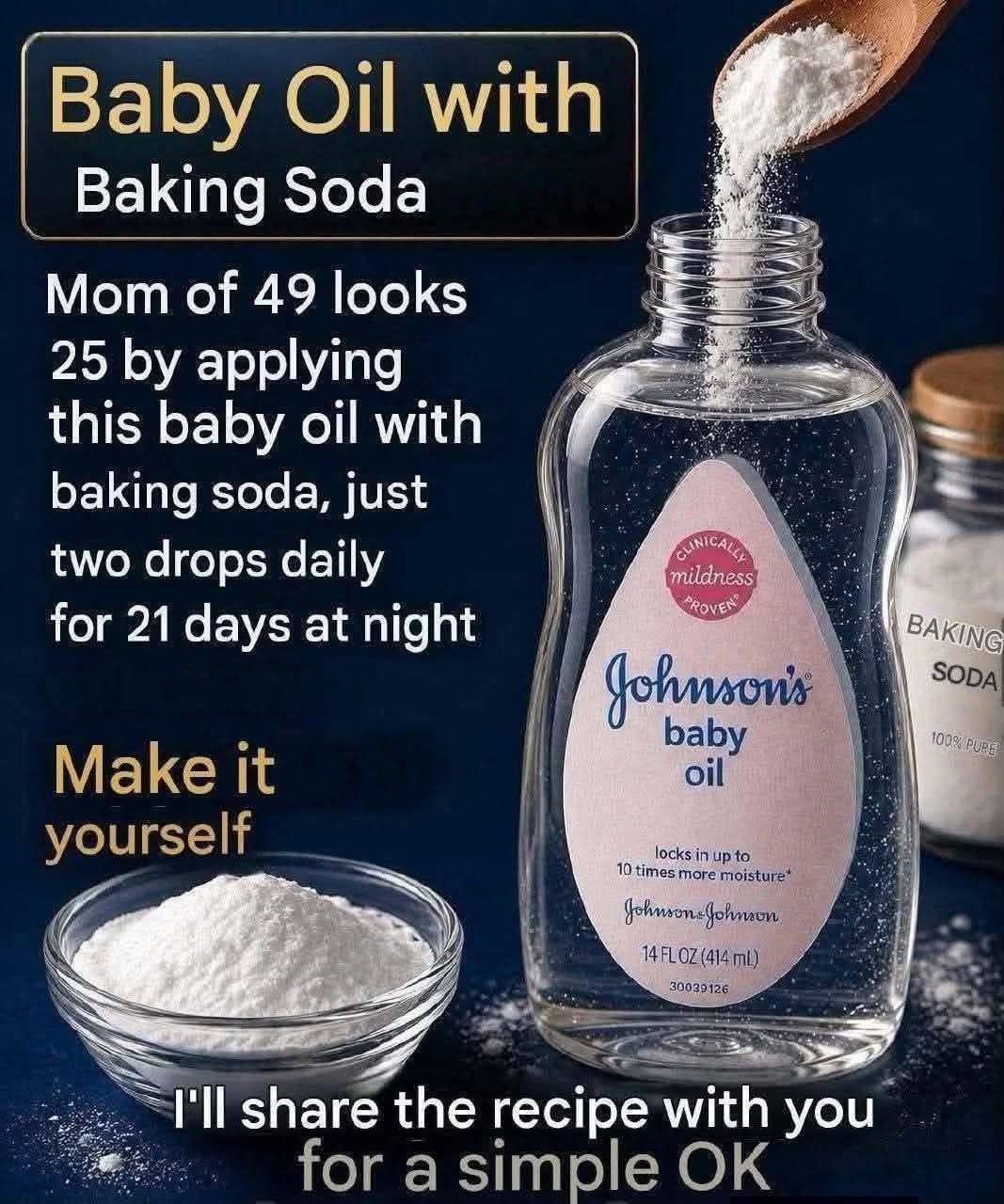
A Safer Alternative to the Viral Mixture
If your goal is simply softer, smoother skin, you do not need baking soda.
A much gentler option is to apply a small amount of fragrance-free mineral oil or baby oil over damp skin after cleansing.
You can also layer it over your regular moisturizer to reduce moisture loss overnight.
Simple Overnight Softening Method
You will need:
- A gentle facial cleanser
- Your regular fragrance-free moisturizer
- 1 to 2 drops of plain mineral oil or fragrance-free baby oil
Step 1: Cleanse Gently
Wash your face with a mild cleanser and lukewarm water.
Avoid harsh scrubs or very hot water.
Pat the skin gently with a towel but leave it slightly damp.
Step 2: Apply Moisturizer
Apply your usual moisturizer while the skin still contains a little surface moisture.
This provides water-binding and moisturizing ingredients that oil alone may not supply.
Step 3: Seal With a Tiny Amount of Oil
Place 1 or 2 drops of mineral oil between your fingertips and gently press it over dry areas.
You do not need a thick layer.
Using more will generally make the skin greasier without improving the moisturizing effect.
Should You Apply Baby Oil to Wet Skin?
Slightly damp skin is ideal.
The oil helps slow evaporation of that water.
This principle is especially useful on the body after bathing.
Can Baby Oil Clog Pores?
Highly refined mineral oil is generally considered low in comedogenic potential for many people.
However, individual skin responses vary.
Some baby oils also contain fragrance, which may irritate sensitive or acne-prone skin.
If you are prone to breakouts, choose a fragrance-free facial moisturizer or facial oil formulated specifically for your skin type.
What If You Still Want to Try Baking Soda?
For facial skincare, the safest recommendation is generally to skip it.
There are gentler exfoliating products specifically formulated for skin that have controlled concentrations and appropriate pH levels.
If you have already used baking soda and your skin feels tight, irritated, or burning, rinse with lukewarm water and apply a bland fragrance-free moisturizer.
Why a Brown Sugar Substitute Is Not Always Better
Replacing baking soda with coarse sugar may sound gentler, but facial scrubs can still irritate delicate skin if rubbed aggressively.
Sugar particles can have irregular edges and may cause unnecessary friction.
If you want exfoliation, a professionally formulated mild exfoliant is usually easier to control.
Patch Testing
Whenever you introduce a new skincare product, especially if you have sensitive skin, eczema, rosacea, or a history of reactions, patch testing is sensible.
Apply a small amount to a limited area and monitor for redness, itching, swelling, or burning.
If irritation develops, stop using the product.
Can This Mixture Remove Wrinkles?
No reliable evidence shows that baby oil and baking soda remove deep wrinkles.
Moisturization can temporarily make dry skin look smoother and plumper, but true wrinkles involve structural changes in collagen, elastin, and other components of the skin.
Can It Remove Dark Spots?
There is no good evidence that this mixture safely removes hyperpigmentation or age spots.
Dark spots can have several causes, including sun exposure, inflammation, hormonal changes, or other skin conditions.
Daily sunscreen is one of the most important steps for preventing many types of pigmentation from becoming darker.
Can Baby Oil Make Skin Look Younger?
It can make dry skin appear smoother because moisturized skin reflects light differently and fine dehydration lines may become less obvious.
This is a cosmetic moisturizing effect rather than true age reversal.
The Most Important Anti-Aging Step
Daily sun protection remains one of the most effective ways to reduce preventable premature skin aging.
Regular exposure to ultraviolet radiation contributes to:
- Fine lines
- Wrinkles
- Uneven pigmentation
- Loss of elasticity
- Changes in skin texture
A broad-spectrum sunscreen with appropriate SPF provides far more meaningful long-term protection than a homemade baking soda treatment.
A Simple Skin Routine That Usually Works Better
You do not need a complicated collection of products.
Morning
- Gentle cleansing if needed
- Moisturizer
- Broad-spectrum sunscreen
Evening
- Gentle cleansing
- Moisturizer
- A small amount of mineral oil over very dry areas if desired
For Extra Dry Skin
If the skin feels persistently dry, consider a moisturizer containing ingredients such as:
- Ceramides
- Glycerin
- Hyaluronic acid
- Petrolatum
- Squalane
These products are specifically formulated to support hydration and the skin barrier.
Common Mistakes to Avoid
- Using baking soda on the face every day
- Scrubbing aggressively
- Applying oil over makeup or unclean skin
- Using excessive amounts of oil
- Expecting a homemade mixture to erase wrinkles
- Skipping sunscreen
- Continuing after burning or irritation develops
Frequently Asked Questions
Can I Use Baby Oil on My Face Every Night?
Some people tolerate a very small amount of fragrance-free mineral oil well, particularly if their skin is dry.
Others may prefer a facial moisturizer designed for their specific skin type.
Can I Mix Baby Oil With Moisturizer?
Yes.
You can apply moisturizer first and then press a small amount of oil over it.
This may help reduce moisture loss.
Should I Mix Baking Soda Into My Moisturizer?
No.
Doing so may alter the product’s pH and increase the risk of irritation.
How Often Should I Exfoliate?
That depends on skin type and the product being used.
Many people do not need frequent exfoliation at all.
If you use an exfoliating product, follow its directions and stop if irritation develops.
Can I Leave Baby Oil on Overnight?
A small amount of plain or fragrance-free mineral oil can generally be left on dry skin overnight if you tolerate it well.
Can Baking Soda Help Acne?
Baking soda is not a recommended acne treatment.
Its alkalinity and potential for irritation may actually worsen an already compromised skin barrier.
Can Baby Oil Treat Acne?
No.
It may reduce dryness but does not treat the causes of acne.
When Should You See a Dermatologist?
Seek professional advice if you have:
- Persistent acne
- Severe irritation
- Recurring rashes
- Unexplained dark spots
- Persistent itching
- Skin lesions that bleed or change
Final Thoughts
The baby oil and baking soda trick sounds appealing because both ingredients are inexpensive and familiar.
Baby oil can indeed be useful for helping the skin retain moisture, particularly when applied to damp skin or layered over moisturizer.
Baking soda is the part that deserves caution.
Because it is alkaline, frequent use on facial skin can interfere with the protective skin barrier and lead to dryness, irritation, or sensitivity.
You do not need to use the mixture every day for 21 days—or even several times a week—to achieve softer skin.
A gentle cleanser, a good moisturizer, a tiny amount of mineral oil when needed, and daily sunscreen provide a much more skin-friendly approach.
And while these habits can help your complexion look smoother and healthier, no homemade oil-and-baking-soda mixture can erase deep wrinkles or reverse the natural aging process.
The most effective skincare routines are usually not dramatic. They are gentle, consistent, protective, and designed to preserve the skin barrier rather than repeatedly disrupt it.
