
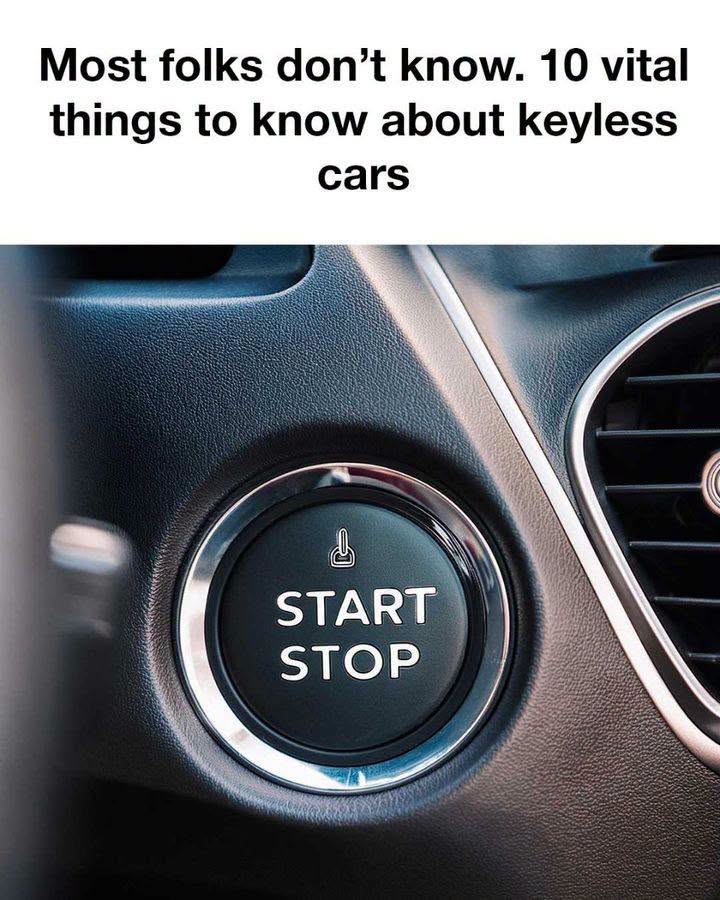
Keyless entry and push-button start systems have become common features in modern vehicles. Instead of inserting a traditional metal key into the door or ignition, drivers can unlock and start the car while carrying a small electronic key fob.
The convenience is obvious. You can approach the vehicle with your hands full, open the door without searching through a bag or pocket, and start the engine with the press of a button.
But keyless systems also introduce a few things drivers should understand, including dead key-fob batteries, emergency access methods, security concerns, and the importance of knowing exactly how your particular vehicle behaves.
How Keyless Entry Actually Works
Most modern keyless systems rely on short-range radio communication between the vehicle and the electronic key fob.
When you approach the vehicle or touch the door handle, the car sends out a signal asking for an authorized key. The fob responds with encrypted information. If the vehicle recognizes the response, it unlocks the doors.
A similar exchange occurs when you press the engine start button.
Because the system verifies an electronic credential rather than simply detecting any radio signal, another person’s key fob normally cannot start your vehicle.
Passive Keyless Entry Versus Remote Keyless Entry
These terms are sometimes used interchangeably, but they can describe slightly different systems.
Remote keyless entry generally requires you to press a button on the fob to lock or unlock the doors.
Passive keyless entry can unlock the vehicle automatically when the authorized fob is nearby and you touch or approach the door handle.
Many newer vehicles combine both functions.
Why Drivers Like Keyless Systems
The biggest advantage is convenience.
You do not have to remove the key from your pocket or handbag every time you enter the vehicle.
This can be especially helpful when:
- Carrying groceries
- Holding a child
- Walking through rain or snow
- Loading luggage
- Entering the vehicle at night
Push-button ignition also eliminates the traditional ignition cylinder, allowing manufacturers to integrate more electronic security and convenience features.
Modern Keys Use More Than a Simple Fixed Code
Many keyless systems use encrypted communication, rolling codes, challenge-response authentication, or other methods designed to make simple signal copying difficult.
This makes them considerably more sophisticated than early remote controls.
However, sophisticated security does not mean that every system is impossible to attack.
The Myth: A Dead Key-Fob Battery Will Shut the Car Off While Driving
In most vehicles, a key-fob battery dying while the engine is already running does not suddenly shut down the engine.
The vehicle usually allows you to continue driving until you turn it off.
You may see a warning such as “Key Not Detected” or “Replace Key Battery.”
Once the engine is switched off, restarting may require using the manufacturer’s emergency procedure.
What Happens If the Key Leaves the Car While the Engine Is Running?
This depends on the vehicle.
Many cars continue running while producing warning sounds or dashboard messages.
This is intentional because suddenly shutting down an engine while the vehicle is moving could create a serious safety hazard.
Do not assume this behavior is identical across all makes and models. Check your owner’s manual.
The biggest surprise for many drivers is that the electronic fob usually contains several backup features that remain useful even when the battery appears completely dead.
