
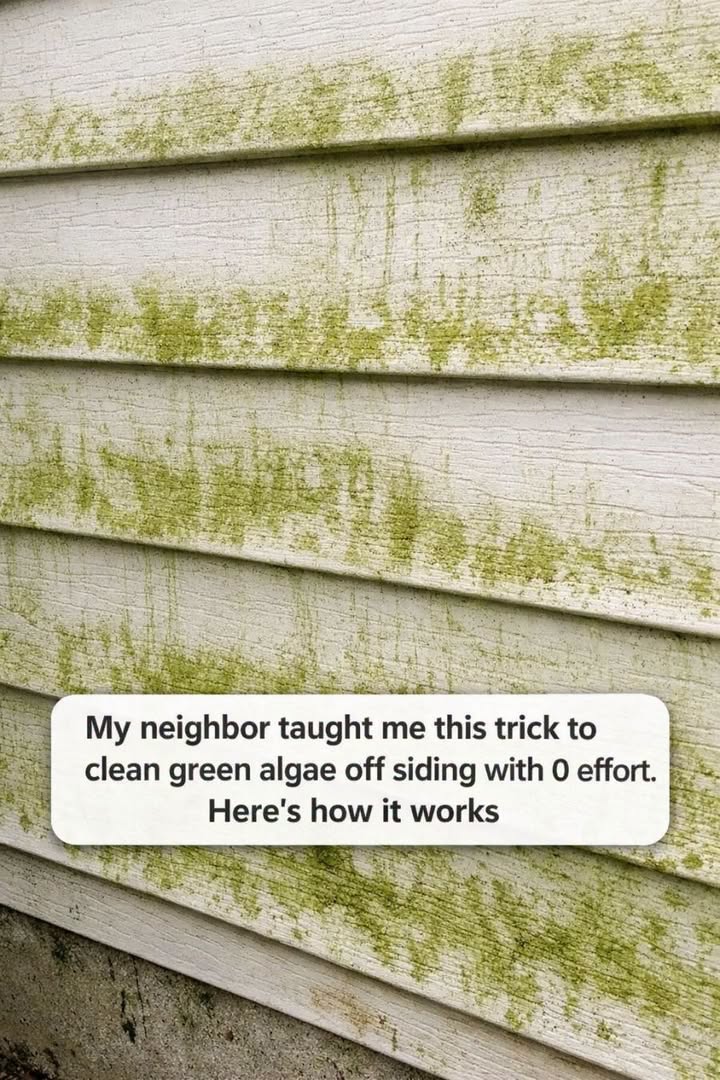
Green algae on siding is a common issue for many homeowners, especially in places with high humidity, frequent rain, or large areas of shade. It can make the exterior of a home look neglected, and if moisture problems continue for long periods, the buildup may become harder to remove.
For years, I struggled to find a simple way to deal with green algae without turning the job into an exhausting afternoon of scrubbing. Pressure washing can work, but it requires equipment, care, and the right technique to avoid forcing water behind siding or damaging painted surfaces.
Then my neighbor showed me a much simpler approach: apply a mild cleaning solution with a garden sprayer, let it sit for a short period, and rinse it away with a regular garden hose. It does not always eliminate every stubborn patch on the first try, but for light to moderate algae buildup, it can make the job significantly easier.
1. The Surprising No-Scrub Trick My Neighbor Shared
The method my neighbor recommended was surprisingly simple and relied on a few common household products. Instead of immediately scrubbing the siding or using an aggressive cleaner, the idea was to spray on a mild solution and give it time to loosen the algae.
A garden sprayer makes application easier and can help reach large sections of siding from the ground. Depending on the height and layout of your house, however, some upper areas may still require a longer-reach sprayer or another safe method of access.
The important part is the waiting period. The solution needs time to wet the algae and loosen the buildup before rinsing. This is what reduces the amount of physical scrubbing required.
2. Why Green Algae Loves Vinyl and Painted Siding
Green algae tends to thrive where moisture lingers and direct sunlight is limited. That is why north-facing walls, siding beneath trees, areas behind dense shrubs, and sections near leaking gutters often develop green staining first.
Vinyl siding and painted exterior surfaces can remain damp after rain, irrigation, or morning dew, especially when air circulation is poor. Airborne algae spores can settle on these damp surfaces and gradually form visible patches.
Dirt, pollen, and other organic debris can also accumulate on siding and create conditions that encourage growth. Reducing moisture and periodically cleaning exterior surfaces can therefore help slow the return of algae.
3. The Simple Cleaning Mixture: What You Need
For a mild homemade cleaner, you can use water, white vinegar, and a small amount of dish soap.
- 1 gallon of water
- 1 cup of white vinegar
- About 1 tablespoon of mild dish soap
The vinegar adds mild acidity, while the dish soap helps the liquid spread over the surface rather than running off immediately.
This mixture may work well on light algae and surface grime, but results can vary depending on how established the growth is and what type of siding you have.
4. Use Conservative Ratios to Protect the Surface
More vinegar is not necessarily better. Highly concentrated acidic solutions may affect certain paints, finishes, sealants, or nearby materials.
A ratio of about 1 cup of white vinegar to 1 gallon of water is a relatively mild starting point. Before treating a large area, test the mixture on a small, inconspicuous section of siding.
Allow the test spot to dry fully and check for discoloration, dulling, streaking, or any other unwanted change before continuing.
Manufacturer care instructions should take priority, particularly for specialty siding, recently painted surfaces, older finishes, or materials under warranty.
5. How to Apply the Solution Without Heavy Scrubbing
Pour the prepared mixture into a clean garden sprayer and apply it evenly over the algae-covered siding.
Work in manageable sections so the solution does not dry before you have time to rinse it. Applying from the bottom upward can help reduce streaking during the cleaning stage, while rinsing is generally done from the top downward.
Wet the affected areas thoroughly, but avoid directing excessive liquid into vents, electrical fixtures, window openings, siding seams, or other places where water should not enter.
If the area is above the safe reach of your sprayer, do not improvise with unstable ladders. A long-reach exterior cleaning sprayer or professional assistance may be safer.
The easiest part comes next: giving the solution enough time to loosen the green buildup can make a noticeable difference before you ever reach for a brush.
