
Not long ago, choosing a good tomato felt simple—pick the reddest one and move on. Today, that small decision has become more thoughtful. As awareness around food quality grows, more people are paying attention not just to how produce looks, but how it’s grown, handled, and ripened.
And few foods tell their story quite like the humble tomato.
Slice It Open—That’s Where the Truth Is
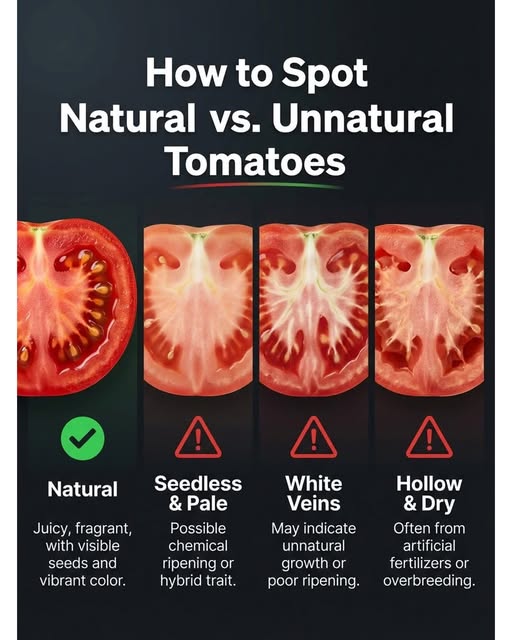
At first glance, most tomatoes in the supermarket look the same: smooth, shiny, and evenly red. But the real difference reveals itself the moment you cut one open.
A naturally ripened tomato often shows:
- Distinct seed pockets in a loose, star-like pattern
- Juicy, slightly uneven flesh
- A rich, vibrant interior color
These aren’t random traits—they’re signs of slow, natural development. Tomatoes that ripen on the vine have more time to build flavor, texture, and complexity.
By contrast, tomatoes grown for large-scale distribution are often picked early and ripened later, which can affect both taste and structure.
