
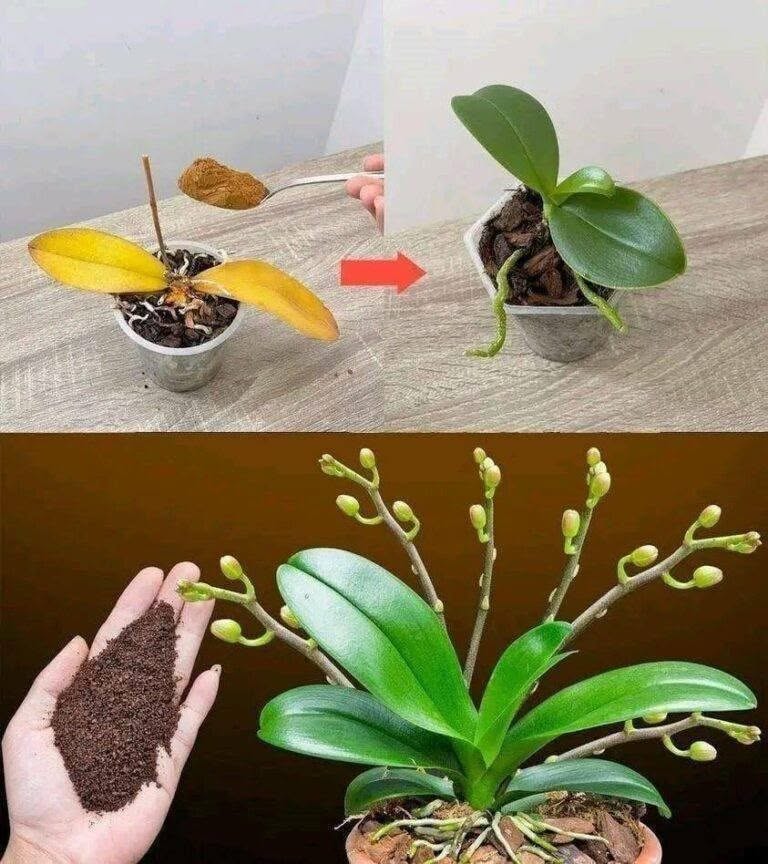
Can a Teaspoon of Coffee Really Help Orchids Bloom? What Gardeners Should Know
Many people choose orchids as houseplants because of their elegant flowers, striking colors, and intricate patterns. Their beauty makes them extremely popular, but orchids can also seem unpredictable when it comes to blooming.
When an orchid refuses to flower, it is tempting to search for a quick household trick that might trigger new blooms. One method that often circulates among gardeners involves using a very small amount of diluted coffee.
Coffee does contain compounds and nutrients that can influence growing conditions, but it should not be viewed as a guaranteed way to make orchids bloom. Orchid flowering depends much more heavily on light, temperature, watering, root health, species, and proper fertilization.
Still, if used carefully and sparingly, diluted coffee may slightly alter the growing environment. Understanding how orchids actually grow is important before experimenting with it.
The Basic Conditions Orchids Need to Bloom
Before trying any homemade treatment, it helps to make sure the orchid’s basic requirements are being met.
Light
Most commonly grown orchids prefer bright, indirect light. Too little light is one of the most common reasons a healthy-looking orchid fails to bloom.
Leaves that are very dark green can sometimes indicate that the plant is not receiving enough light, while yellowing or scorched patches may suggest excessive direct sun.
The ideal amount of light varies by orchid species, so care instructions for the specific variety should always be considered.
Watering
Overwatering is a major cause of orchid decline because orchid roots need both moisture and air.
Rather than following a rigid schedule, water according to the condition of the potting medium and roots. For many orchids, watering is appropriate when the growing medium has nearly dried but before the plant becomes severely dehydrated.
Orchids should never be left sitting continuously in water unless they are a species specifically adapted to that condition.
Humidity
Many orchids originate from humid environments and appreciate moderate humidity around their leaves and roots.
However, high humidity without adequate airflow can encourage fungal and bacterial problems, so good ventilation is equally important.
Fertilization
Orchids benefit from light, regular feeding with a balanced fertilizer formulated for orchids or other container plants.
More fertilizer does not necessarily mean more flowers. Excess fertilizer can damage roots, cause salt buildup, and interfere with healthy growth.
Where the Coffee Idea Comes From
The enthusiasm around coffee usually comes from two observations: brewed coffee is mildly acidic, and coffee contains small amounts of plant nutrients.
Some gardeners believe that a teaspoon of diluted coffee added occasionally to orchid care may support growth or flowering.
However, orchids do not all prefer the same pH, and their potting media are very different from ordinary garden soil. Many are grown in bark, sphagnum moss, perlite, or other highly aerated materials.
That means a household treatment that works for one plant may not work for another.
Why Coffee May Affect the Growing Medium
Brewed coffee is mildly acidic, so adding it to irrigation water can temporarily lower the pH of that water.
In some growing situations, slightly acidic conditions can help certain nutrients remain available to plants.
However, repeatedly applying coffee can also make the growing medium too acidic or contribute to residue buildup, especially in small containers.
Does Coffee Provide Useful Nutrients?
Coffee contains small amounts of nitrogen and other compounds, but it is not a complete orchid fertilizer.
Orchids need a balanced supply of nutrients, including nitrogen, phosphorus, potassium, and micronutrients.
Relying on coffee instead of an appropriate fertilizer may eventually lead to nutrient imbalances rather than better flowering.
The most important question is not whether coffee can affect an orchid, but how to experiment with it without damaging delicate roots or disrupting the plant’s normal care.
