
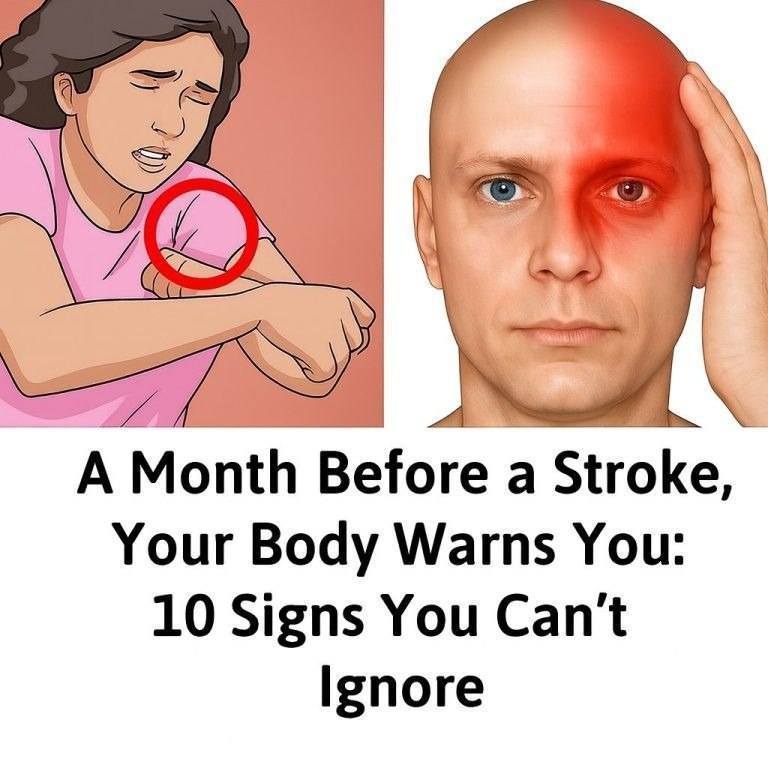
Prompt treatment of a stroke has a major impact on survival and recovery. That’s why it’s essential to understand what it is and how to recognize its warning signs.
What Is a Stroke?
A stroke occurs when blood flow to part of the brain is interrupted, depriving it of oxygen. Brain cells begin to die within minutes, which can lead to serious or even fatal consequences.
There are three main types:
- Ischemic stroke (most common): caused by a blood clot blocking an artery (thrombosis or embolism).
- Hemorrhagic stroke: caused by bleeding in the brain, often due to a ruptured blood vessel.
- Transient ischemic attack (TIA): a temporary blockage that resolves quickly, but is a major warning sign of a future stroke.
Can the Body Warn You in Advance?
In some cases, the body may give warning signs days or weeks before a stroke, most often in the form of a TIA. However, symptoms occurring a full month before are not always specific or reliable indicators.
That said, certain unusual or sudden symptoms should always be taken seriously.
Immediate Warning Signs (Emergency)
These symptoms require urgent medical attention. Use the FAST rule:
- Face: drooping or uneven smile
- Arm: weakness or numbness in one arm
- Speech: difficulty speaking or understanding
- Time: act immediately—call emergency services
Possible Early Warning Signs
Some symptoms may appear before a major stroke, especially if they come and go:
- Sudden weakness or numbness on one side of the body
- Temporary vision loss or tunnel vision
- Loss of coordination or balance
- Difficulty speaking or understanding
- Sudden, severe headaches (especially if unusual)
- Episodes resembling mini-strokes (TIAs)
Symptoms That Need Caution
see continuation on next page
