
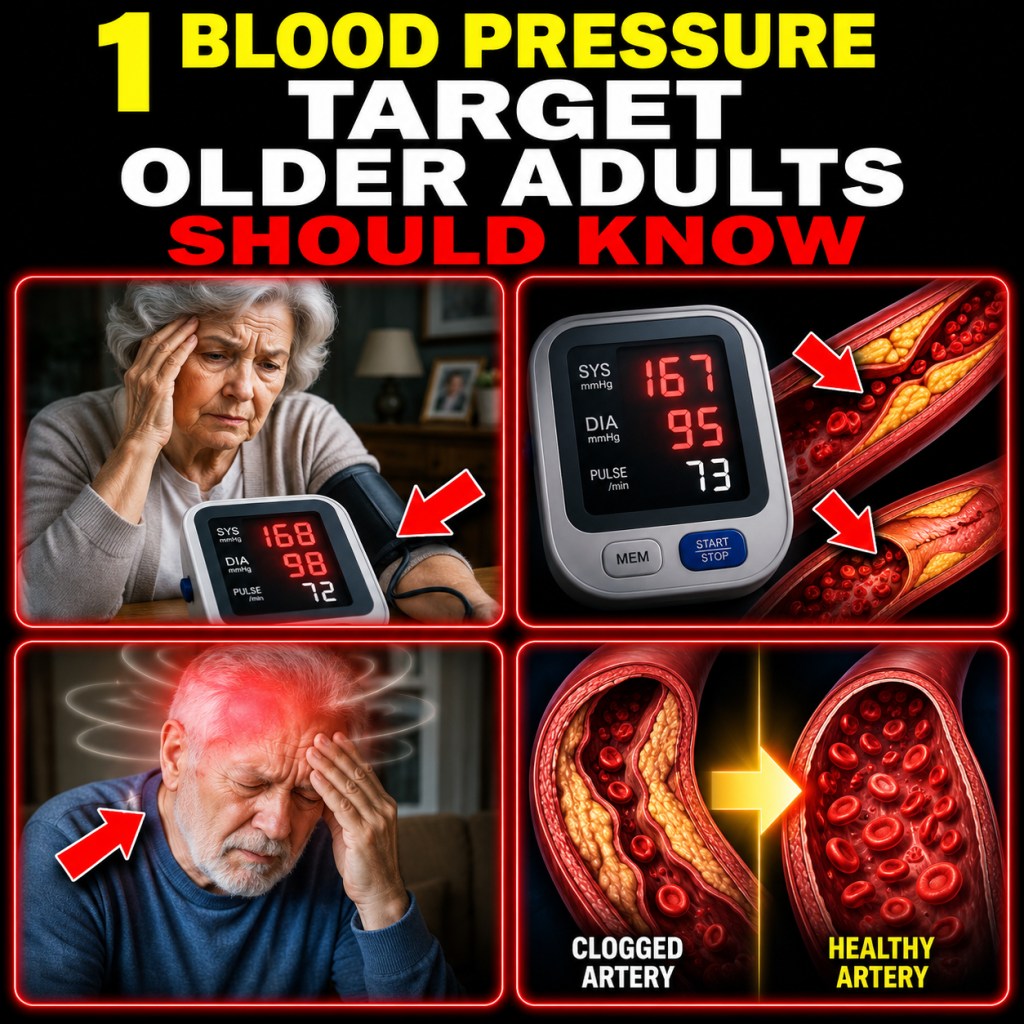
Blood pressure is one of the most important indicators of cardiovascular health, especially as we age. Yet few health topics generate as much confusion as the question:
What is considered a healthy blood pressure for older adults?
Depending on where you look, you may find different answers. Some sources suggest higher numbers are acceptable for seniors, while others recommend maintaining blood pressure levels similar to those of younger adults.
According to major health organizations, including the American Heart Association and the American College of Cardiology, the ideal blood pressure for most adults—including many older adults—is generally around:
119/79 mmHg or lower
However, the story is more complex than a single number.
Understanding Blood Pressure
Blood pressure is measured using two numbers:
- Systolic pressure (top number): pressure when the heart beats.
- Diastolic pressure (bottom number): pressure when the heart rests between beats.
For example:
119/79 mmHg
means a systolic pressure of 119 and a diastolic pressure of 79.
Why Is There So Much Confusion?
Several factors contribute to conflicting advice:
- Blood pressure guidelines have changed repeatedly over the years.
- Different organizations may use different thresholds.
- Older recommendations remain available online.
- Individual health conditions can influence treatment goals.
As a result, many people receive mixed messages about what numbers they should aim for.
How Guidelines Have Changed
Decades ago, doctors often accepted much higher blood pressure levels in older adults.
One old rule suggested adding 100 to a person’s age when estimating an acceptable systolic pressure. Under that approach, a 70-year-old could be considered normal at 170 mmHg systolic.
Modern research has largely moved away from this concept because higher blood pressure significantly increases the risk of heart disease, stroke, kidney disease, and cognitive decline.
Current blood pressure categories and recommendations continue on the next page.
