
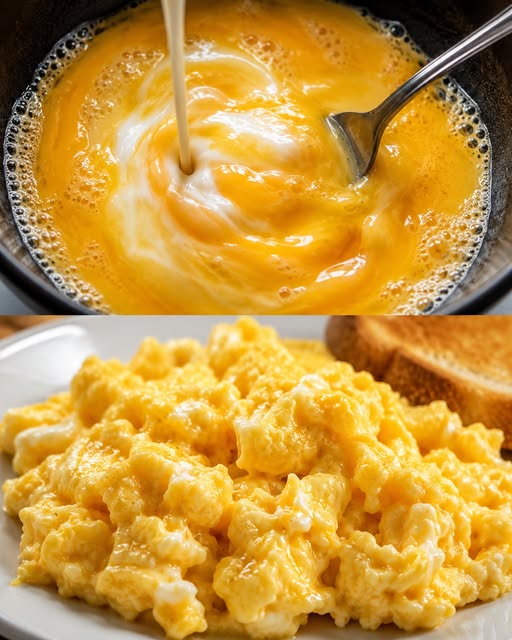
Perfect scrambled eggs are one of the simplest pleasures in cooking. Soft, creamy, fluffy, and rich, they can transform an ordinary morning into something comforting and satisfying.
Yet surprisingly, scrambled eggs are also one of the most commonly overcooked foods. Too much heat, too much stirring, or even a few extra seconds in the pan can turn silky eggs into dry, rubbery curds.
The good news? Truly perfect scrambled eggs require only a few ingredients and a little patience.
No expensive equipment. No complicated techniques. Just eggs, butter, gentle heat, and attention.
🥚 Why Scrambled Eggs Are Harder Than They Look
Many people assume scrambled eggs cook quickly and therefore should be rushed.
In reality, eggs are delicate proteins. High heat causes the proteins to tighten too quickly, squeezing out moisture and creating that dry, crumbly texture nobody enjoys.
The secret is understanding one simple principle:
Low heat creates soft eggs.
That’s why chefs and experienced home cooks rely on slow cooking and careful stirring rather than speed.
✨ The Secret Behind Creamy Scrambled Eggs
Three things make all the difference:
- low heat,
- butter,
- and removing the eggs before they fully finish cooking.
Eggs continue cooking from residual heat even after leaving the pan. This is called carryover cooking, and it’s the key to achieving a creamy texture.
🧈 Ingredients You’ll Need
Serves 2
- 4 large eggs
- 1 tablespoon unsalted butter
- 1–2 teaspoons milk, cream, or water (optional)
- Pinch of salt
- Freshly ground black pepper
💡 Why Add Milk, Cream, or Water?
This small addition slightly changes the texture:
- Cream creates richer eggs.
- Milk creates softness.
- Water creates lighter, fluffier curds because steam forms during cooking.
The amount should remain small. Too much liquid can make eggs watery.
🥄 Step 1: Crack and Whisk the Eggs
Crack the eggs into a bowl.
Add your optional milk, cream, or water.
Whisk gently until yolks and whites are fully combined.
Avoid aggressively whipping the eggs. Over-whisking incorporates too much air and can create dense or dry results later.
You want a smooth, evenly colored mixture—not foam.
🔥 Step 2: Heat the Pan Properly
Choose a nonstick skillet or a well-seasoned cast iron pan.
Place it over medium-low or low heat.
Add butter and allow it to melt slowly.
The butter should foam gently but never brown.
Brown butter introduces stronger flavors and higher heat than needed for delicate scrambled eggs.
🍳 Step 3: Cook Low and Slow
Pour the eggs into the pan.
Wait about 10 seconds before stirring.
Using a silicone spatula or wooden spoon, gently push the eggs from the edges toward the center in slow, sweeping motions.
The goal is to form soft, tender curds.
Do not constantly stir rapidly.
Slow folding creates larger, creamier curds with a luxurious texture.
⏳ Patience Is the Secret Ingredient
Cooking scrambled eggs properly usually takes between 3 and 5 minutes.
That may sound slow for eggs, but rushing is what ruins them.
You should hear only a quiet, gentle sizzle—not aggressive frying sounds.
If the pan crackles loudly, the heat is too high.
⚠️ Remove the Eggs Before They Look Finished
This is the step most people miss.
When the eggs appear mostly set but still slightly glossy and soft, remove the pan from the heat immediately.
The residual heat continues cooking them for another minute.
If you wait until they look fully done in the pan, they’ll likely become dry by the time they reach the plate.
The best chef-approved topping ideas, common mistakes to avoid, and ways to make restaurant-quality scrambled eggs continue on the next page.
