
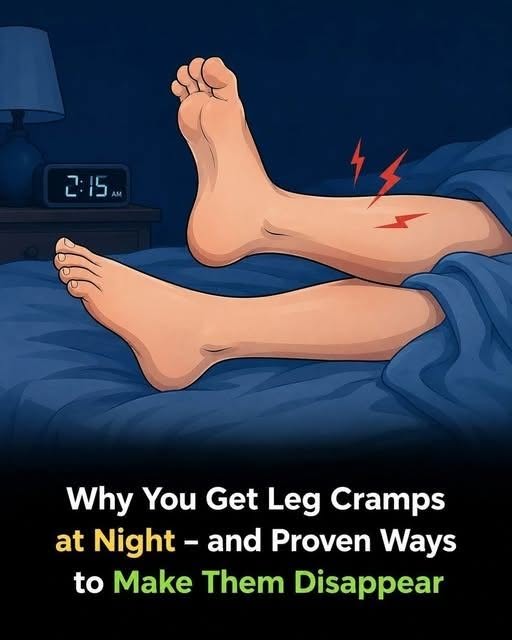
When a Simple Cramp Can Hide a More Serious Problem
Did you know that frequent nighttime cramps can sometimes be linked to an underlying health issue? Although these sudden muscle contractions are often harmless and temporary, repeated episodes may deserve closer attention, especially when they occur frequently, are unusually painful, or are accompanied by other symptoms.
Nighttime leg cramps can have many possible triggers. Some are related to lifestyle or temporary changes in the body, while others may be associated with medical conditions that should be evaluated by a healthcare professional.
Possible Causes of Recurrent Nighttime Cramps
Several factors can contribute to nighttime muscle cramps, including:
- Dehydration
- Circulation disorders
- Muscle fatigue or overuse
- Prolonged sitting or standing
- Certain medications
- Changes in electrolyte balance
- Some neurological, metabolic, or endocrine conditions
Minerals such as magnesium, potassium, and calcium are involved in normal muscle function. However, recurring cramps should not automatically be assumed to come from a mineral deficiency, because many other causes are possible and unnecessary supplementation can sometimes be inappropriate.
When Recurrent Cramps Deserve Medical Attention
If your cramps keep coming back night after night, interfere with your sleep, become increasingly painful, or occur with other symptoms, it is a good idea to speak with a doctor.
A medical evaluation can help identify or rule out possible causes such as circulation problems, diabetes, thyroid disorders, nerve-related conditions, medication side effects, or other health issues.
Seek medical advice more promptly if cramping is accompanied by persistent swelling, redness, weakness, numbness, changes in skin color, or significant pain that does not improve.
A Useful Tip Before Seeing Your Doctor
Write down the frequency, duration, location, and intensity of your cramps before your appointment.
Also note whether they happen after exercise, during sleep, after long periods of sitting or standing, or after starting a new medication.
This information can give your healthcare provider a clearer picture of the pattern and may help guide the evaluation.
Knowing what not to do during a cramp can be just as important as knowing how to relieve it safely.
